Showing posts with label toxic mold. Show all posts

Sunday, March 13, 2016

Home Inspector's Non-Profit Receives Award Work for Persons with Disabilities

Integrated Resources Institute to Receive 2016 Spotlight Award

The Regional Center of Orange County (RCOC) has announced that Integrated Resources Institute (IRI) will receive the 2016 Spotlight Award for its innovative employment placement services for persons with disabilities. The purpose of the Spotlight Award is to honor organizations like IRI, for contributions made toward the enhancement of life for people with disabilities in Orange County, California.

Integrated Resources Institute (IRI) will receive the 2016 Spotlight Award for its innovative employment placement services for persons with disabilities. IRI is recognized nationally and internationally for its progress leadership in integrated work outcomes for persons with significant disabilities. IRI has facilitated over 20,000 job placements  in the U.S. and Australia since 1985. The award will be presented by the Regional Center of Orange County at their awards banquet on April 8, 2016. Joseph Nacario and Steve Zivolich will accept the award on behalf of IRI. The annual award ceremony will be held at 6:00 p.m. at the Embassy Suites, Anaheim, CA.

IRI has facilitated the job placements of over 20,000 persons with significant disabilities into community work settings since 1988, in the U.S. and Australia. In Orange County they currently serve over 100 clients with significant disabilities, and have a 96% employment rate. IRI also provides consultation support for other non-profit organizations to develop similar job placement outcomes for their clients with disabilities.

The Integrated Resources Institute (IRI) work program is a 100% community-based work program. All program service hours are focused on integrated work opportunities for participants. Using a Customized Employment, and Mentor approach, the mentor relationship between employee and employer is personalized in a way that meets the needs of both. IRI has worked to strengthen the capacity of the workforce development system to improve employment outcomes for people with significant disabilities through local implementation as well as international dissemination or our demonstration research. IRI has evidence-based research data showing that Integrated Work efforts lead to positive employment and quality of life outcomes for individuals with disabilities, their families, community and taxpayers.

In addition to its employment program, IRI has developed a Supported Living service in the Orange County Area. The Mission of the Integrated Resources Institute (IRI) Empowered Living Program is to enable individuals with developmental disabilities to live and participate with full integration into all aspects of their community based upon their preferences and choice. The Empowered Living Program assists clients to determine, where, with whom, and how they want to live, resulting in more fulfilling lives based on supports customized to their individual needs and choices.

Empowered Living (SLP) goals enhance opportunities for increased independence, self-reliance, and self-esteem with the utilization of a Circle of Support. Circle members have a relationship based upon respect and dignity for the client and are vested and committed in providing support so that the client will have active participation and control within their community. The Circle will assist the client with implementing those empowerment decisions effectively and responsibly. Goals will be attained by providing supports customized to their individual needs within their community of their own residence and natural environments.

The Service Provider Award goes to an organization, vendored by RCOC to provide support directly to people with disabilities, that demonstrate extraordinary commitment to high quality, person-centered services, while also providing exemplary support for those served, which leads to meaningful lives in their communities.

RCOC will recognize Integrate Resources Institute at the Annual Spotlight Awards dinner, on Friday, April 8, 2016, starting at 6:00 pm. at the Embassy Suites, Anaheim South.


Employers interested in recruiting workers with disabilities can contact the IRI MentorWorks program at (949) 232-1172.


Tuesday, November 24, 2015

Home and Mold Inspector marks his 18th. year in business.

Santa Rosa, California (PRWEB) November 24, 2015
Steve Zivolich, the owner and senior inspector of Guaranteed Property and Mold Inspections (GPI) serving Sonoma, Marin, Napa, Orange, Los Angeles, and Riverside Counties in California, has marked his 18th year in business.
Zivolich holds the premier nationally accredited certification for home inspectors by the American Society of Home Inspectors (ASHI). He is also certified as a residential home inspector by the California Real Estate Inspectors Association (CREIA). In addition, he is nationally certified in Mold, Microbial, Asbestos, Lead Paint, Indoor Air Quality, Energy Conservation and Radon inspections/testing. 
Steve serves on the national certification board of directors for the American Council for Accredited Certification (ACAC), which reviews applications for new mold inspectors to be awarded a nationally accredited certification. These unique certifications require both knowledge verification in the science of microbial inspection, but also extensive experience in the field.
Due to his extensive training and experience, his firm is able to provide additional mold, environmental, and energy expertise with a residential home inspection at no additional cost to clients.
"We inspect every home as if we were moving in our own family," stated Zivolich.
Unlike other mold inspection companies, GPI does not try to up-sell its clients with unneeded mold testing. Currently the EPA and the California Department of Public Health discourage such mold testing. Further, since it is a conflict of interest, GPI only inspects, and does not remediate mold, this avoids a financial bias in their findings. It is also a code of ethics violation for a company to both inspect and remediate mold conditions. As a result, GPI holds the highest ratings by the BBB, Angie's List, and Yelp.
Steve has completed over 7,000 home and mold inspections for pre-listing, time of purchase, post-purchase investigations, as well as expert witness testimony.
He is currently providing Mold Inspection seminars throughout the state for real estate professionals, and code enforcement city government inspectors to assist with implementation of the new California Mold law SB 655, which is taking effect on January 1, 2016.
For more information, call toll free (888) 252-2274 or visit the Web site located at http://www.gpinspect.com.

Wednesday, November 4, 2015

Study: Poor Air Quality Linked to Workers' Low Cognitive Function


CAMBRIDGE, Mass.—People working in well-ventilated buildings with below-average indoor air pollution and low carbon dioxide, levels showed better cognitive functioning than workers in "non-green" offices with typical pollutant and CO2 levels, according to a recent study published in Environmental Health Perspectives.

"These results suggest that even modest improvements to indoor environmental quality may have a profound impact on the decision-making performance of workers," wrote lead author Joseph Allen, director of the Healthy Buildings Program at the Harvard Center for Health and the Global Environment. 

The study of 24 people exposed to different indoor environmental quality conditions over six full work days found that participants' cognitive scores were on average 61% higher on days working in buildings with low pollution levels than on days working in a conventional building. When lowered CO2 levels were coupled with lower pollutants in buildings, cognitive scores were 101% higher than in conventional buildings.

Thursday, November 27, 2014

What mold contamination looks like in a home

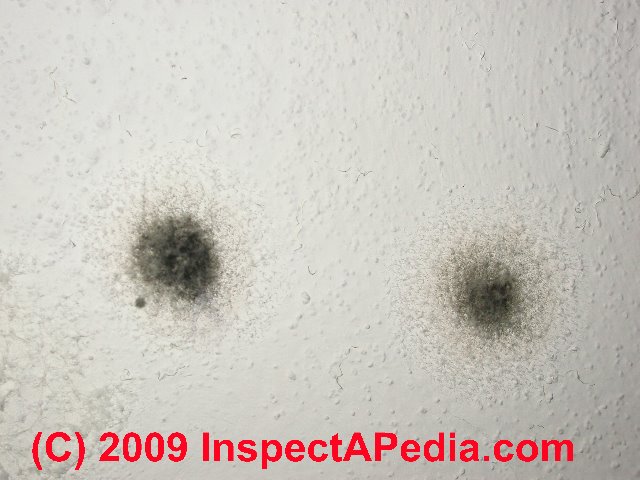
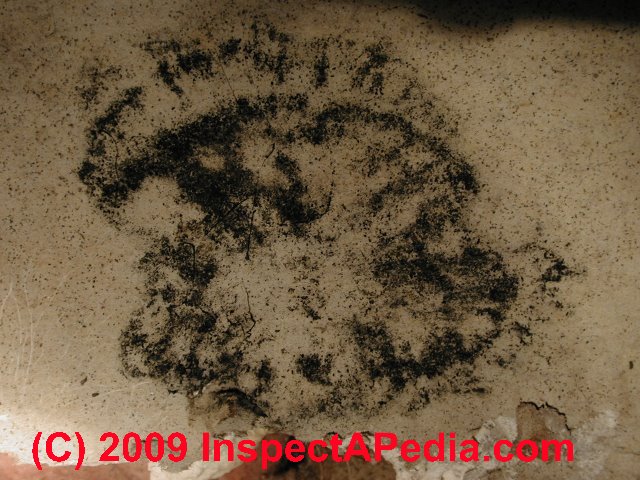
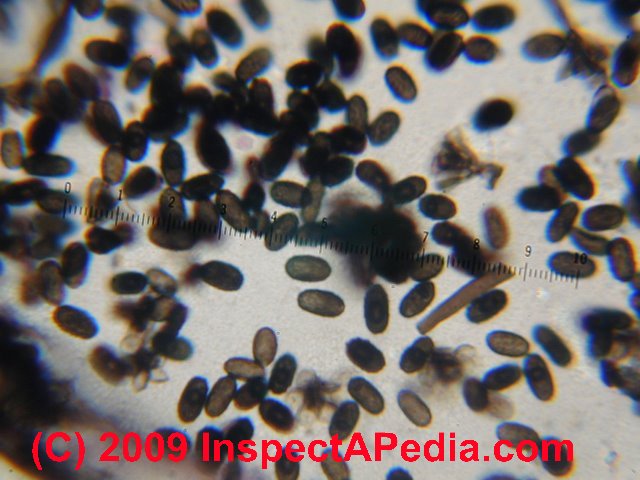
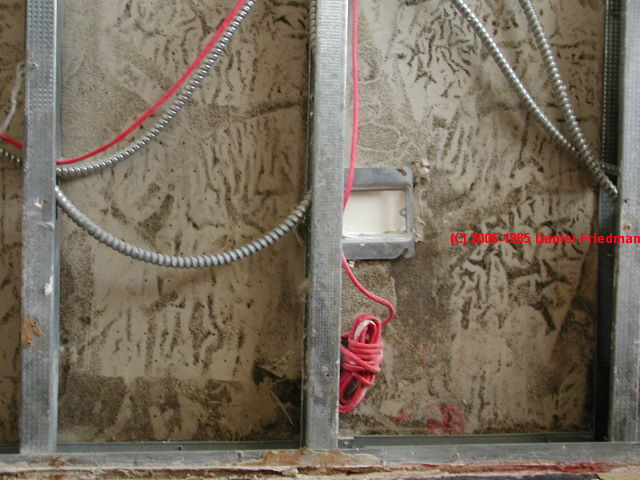
Photographs to Help Identify Mold in Buildings - What mold contamination looks like in a home

Directories of 6 atlases or indices of building mold

Black mold on drywall (C) Daniel Friedman
  1. MOLD ATLAS & PARTICLES INDEX - A-to-Z Mold Atlas of Indoor Clinical Mold, Pathogens, Allergens & Other Indoor Particles
  2. MOLD APPEARANCE - WHAT MOLD LOOKS LIKE - What Does Black or Dark Indoor Mold Look Like? Black Mold spores in the Home - a Photo ID Library. What toxic black mold or other indoor mold looks like in buildings.
  3. MOLD GROWTH on SURFACES, PHOTOS - What Does Mold Look Like on Various Materials & Surfaces? An extensive photographic guide to mold as it is found growing on various building materials & surfaces.

    Also see MOLD GROWTH on SURFACES, TABLE OF - a Table of Kinds of Mold Growth Found on Building Surfaces, lists mold genera/species most often found on specific building surfaces, materials, or contents
  4. MOLD in the PETRI DISH, PHOTOS. - Photographs of Mold Growing on Petri Dishes or Mold Culture Plates or Settlement Plates
  5. MOLD by MICROSCOPE - Mold spores under the Microscope - a Photo ID Library for detection and identification of toxic or other mold
  6. MOLD RELATED ILLNESS SYMPTOMS - Mold Related Illness: Index of Symptoms. Readers should not rely on this document for medical diagnosis and instead should consult with their physician or with a specialist such as a medical toxicologist

Identification Photographs of Black Mold in Buildings - what does black mold look like?

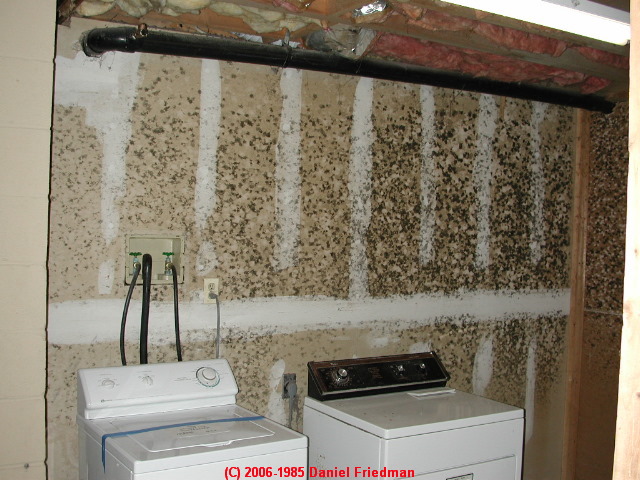
Mold on basement laundry room wall - Daniel Friedman 04-11-01
Black mold in the laundry room
 may look like this extensive case. In cases of large areas of visible mold, unless the mold proves to be only cosmetic mold, professional cleaning is probably needed.
Look closely when inspecting or collecting test samples of "toxic black mold" because often there are other molds, sometimes more harmful and more easily airborne mold species on the same surface, on the hidden side of the same surface of drywall, or nearby.
These include lighter colored genera/species of Aspergillus sp., Penicillium sp. etc. which are too often missed when investigators or building owners focus only on "black mold" testing.

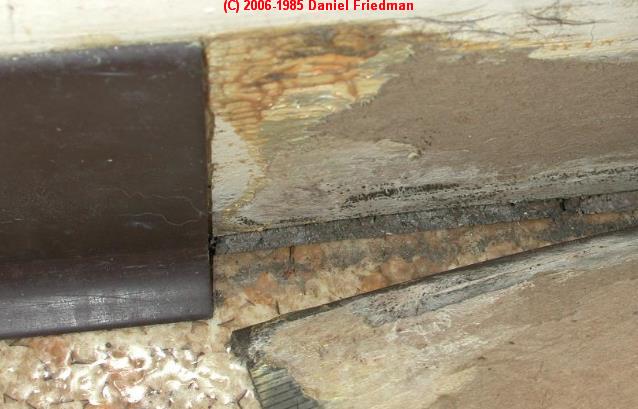
Stachybotrys behind baseboard - Daniel Friedman 04-11-01

Tiny Stachybotrys toxic black mold colony
 on drywall behind a laundry room baseboard. If this is all that's present this is a trivial cleanup and does not need testing and remediation.
But if this is a "tip of iceberg" clue of a larger hidden problem in the wall, or if it might be, further investigation, at least exploring the wall cavity, would be appropriate.


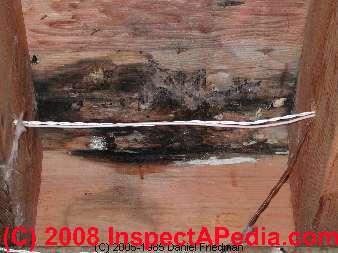
T Scriptis in rotting subfloor - Daniel Friedman 04-11-01
Black mold on rotting subfloor below a leaky sliding glass door - this "black mold" was Taeoniella rudus for which no medical issues have been reported - a wood rotting organism though.
An investigation of the source of outside leaks and extent of damage to the structure were needed at this building.
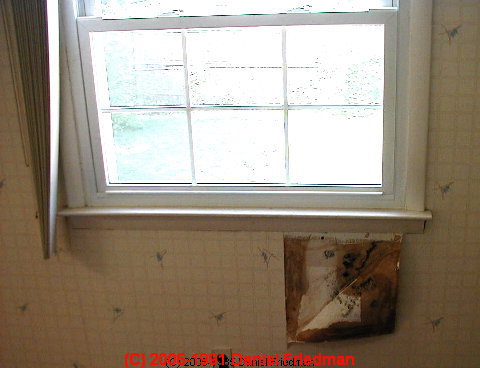
Black Stachybotrys chartarum black mold on wallpaper below a leaky window. The window had been left open more than once during rainy weather. We found that water was leaking into the wall cavity, not just behind the wallpaper.
Stachybotrys black mold on wallpaper - Daniel Friedman
04-11-01
Replacement of a small section of drywall, wall cavity insulation, and wallpaper were appropriate at this location where the first symptom was loose peeling wallpaper which exposed black mold.

Memnoniella echinata black mold in wall cav - Daniel Friedman
04-11-01
Toxic black mold, Memnoniella echinata
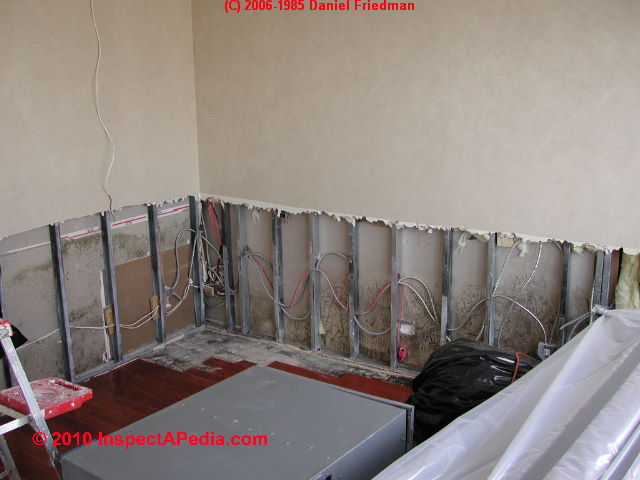
 visible at a small test cut into the wall cavity and contaminating fiberglass insulation in a NY City high rise apartment after water leaked from an A/C condensate line into the metal track of the metal-stud wall.
Larger wall cuts to look for hidden mold and final demolition exposed a very extensive toxic mold colony in this building. Lab processing of a tape sample of this mold was necessary to identify it.
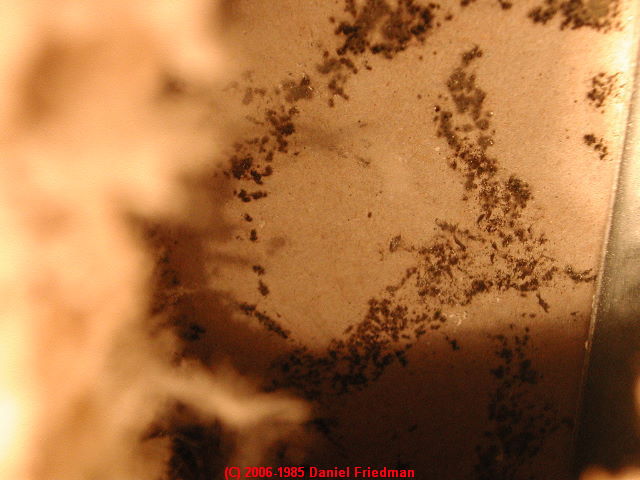
Notice the funny black mold growth pattern on the cavity side of the opposing drywall. This pattern maps the points of contact of the wall insulation kraft paper with the drywall surface, and the movement of moisture and spreading mold growth on the wall surface. It is characteristic of wall cavity mold and is different from the growth pattern of mold growing on a freely exposed-to-air drywall surface.

extensive mold hidden in fiberglass insulated wall cavity -
Daniel Friedman 04-11-01Black and hidden mold in fiberglass wall insulation
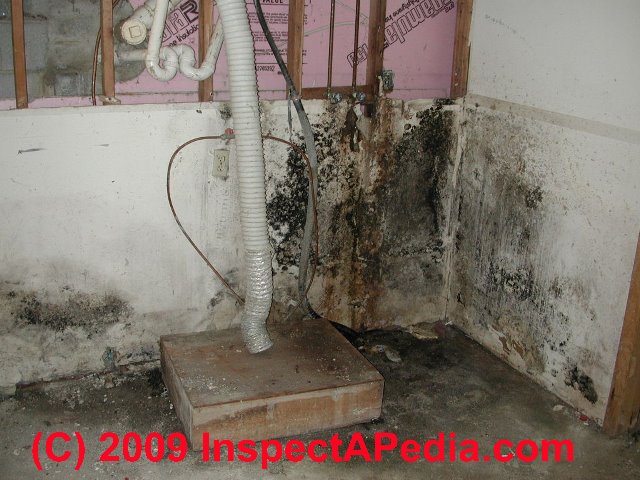
 in a basement exposed to prolonged wet conditions from a wall leak at a water pipe entry point. This mold was almost hidden except for a small mold-suspect patch and larger water stains on the exposed side of the drywall.
The wall cut exposed a surprise point of water entry. Black mold was visible on the insulation kraft paper.
The problematic mold in this case was not visible but was found by a special sampling technique we used to examine the building insulation for Aspergillus sp. and Penicillium sp. (problem molds) in the fiberglass. 
It was found to be highly contaminated and was determined to be an active reservoir releasing high levels of airborne mold into the basement.

More Photos & Close ups of Black Mold on Building Surfaces 

Black mold on drywall (C) Daniel Friedman Black mold on drywall (C) Daniel Friedman
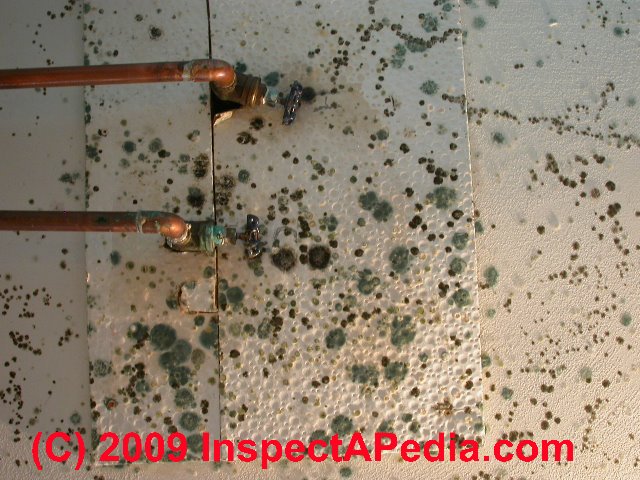
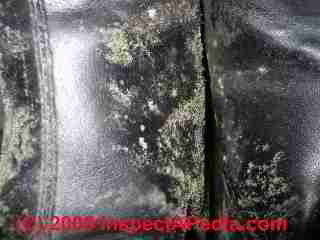
Our mold photo at above left shows black mold colonies growing among green mold colonies on a laundry room ceiling, covering both plastic ceiling tile material (around the plumbing pipes) and drywall. It is often the case that multiple mold genera/species may be growing in the same area, often on the same surface, and at times, on top of one another.
As we advised earlier, look closely when inspecting or collecting test samples of "toxic black mold" because often there are other molds, sometimes more harmful and more easily airborne mold species on the same surface, on the hidden side of the same surface of drywall, or nearby. In this building that was still wet at the time we took this photograph, the airborne level of Aspergillus sp. and Penicillium sp. (the green, gray, and light colored molds in the photo) was very high while the level of airborne Stachybotrys chartarumCladosporium sphaerospermum, and Nigrospora sp. (black molds found on these surfaces) was very low.
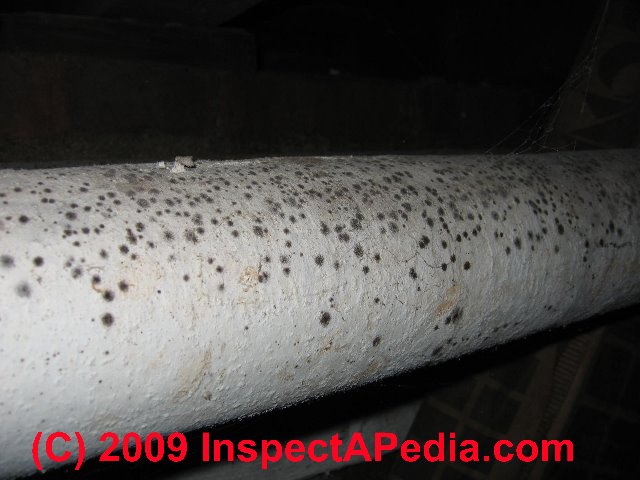
Our photo at above right shows black mold colonies as smaller "spots" growing on the painted surface of cloth covering asbestos pipe insulation.
Black mold on drywall (C) Daniel Friedman Black mold on drywall (C) Daniel Friedman
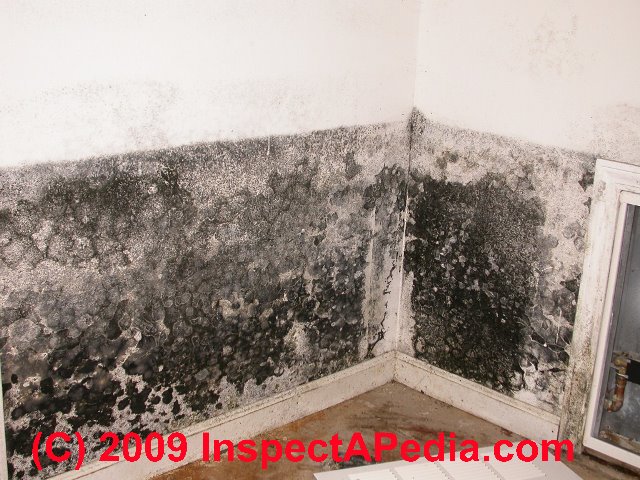
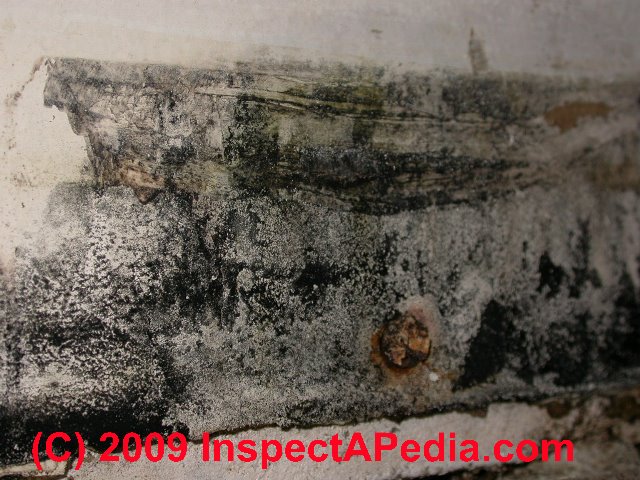
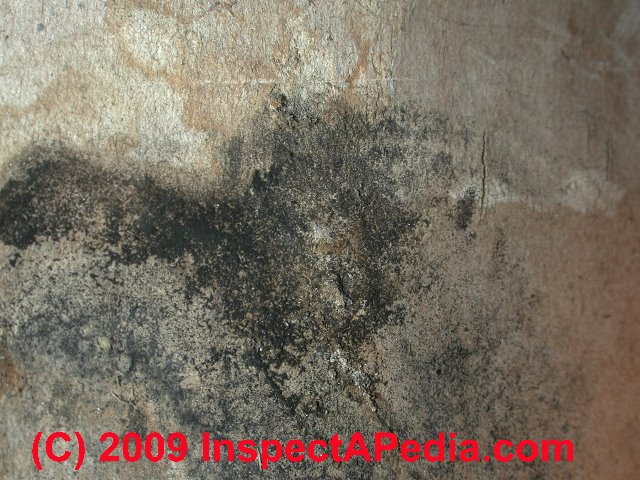
Our black mold photos above show dense black fungal growth on drywall (black mold on Sheetrock™ type wall surfaces) in areas that have been very wet. The distinct top edge of mold growth may mark a flood water level or a discontinuity in the wall material, such as a tape joint in drywall that affected the moisture gradient in the wall and thus the mold growth pattern.

Close up Photographs of Black Mold on Building Surfaces

Black mold on drywall (C) Daniel Friedman Black mold on drywall (C) Daniel Friedman
Here we begin to "zoom in for a closer look at dense black mold growth on indoor building surfaces in a wet basement. Notice that the mold growth on drywall and often on other surfaces includes a family of circular growth patterns (upper area of photo at above right) until the mold growth has expanded to form a solid black covering (left wall of photo at left and lower wall of black mold in photo at right).
Black mold on drywall (C) Daniel Friedman Black mold on drywall (C) Daniel Friedman
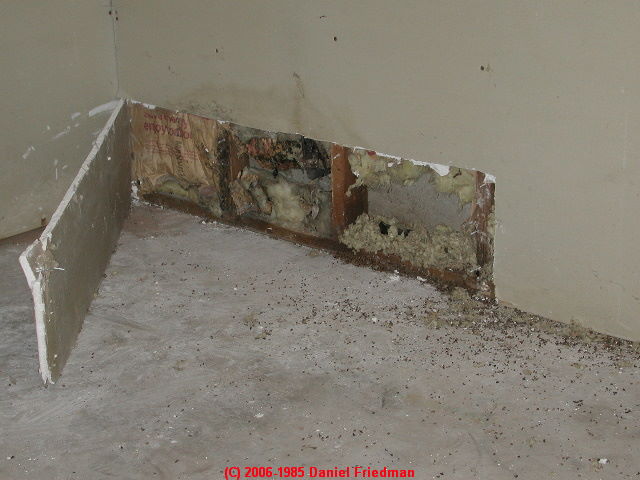
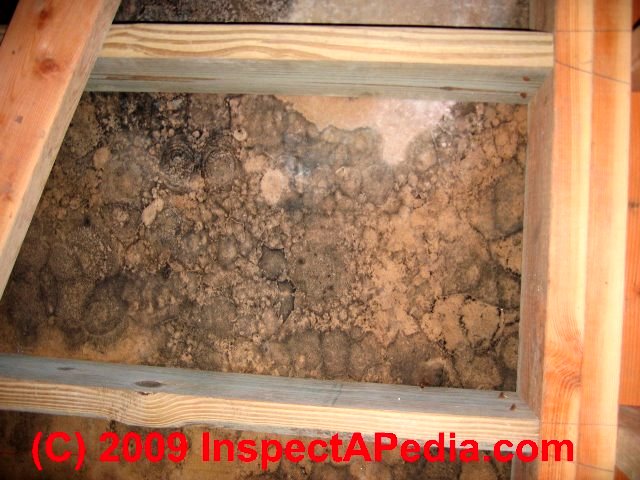
Our photo at above left shows black mold colonies as individual rounded "rings" on the cavity side of drywall on a building crawl area wall. The black mold photo at right shows how dense black mold may be hidden from view behind wall baseboard trim (removed for this picture) in a building that has suffered wet floors.
Black mold on furniture (C) Daniel Friedman Black mold on canvas clothing or bag (C) Daniel Friedman
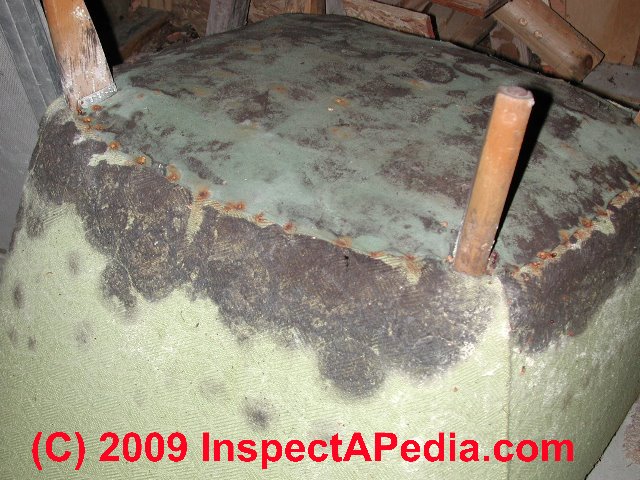
Black mold growth on furniture is obvious in these two photographs, of a mold on a leatherette surface (left) and on an upholstered chair (right).
Black mold on drywall (C) Daniel Friedman Black mold on drywall (C) Daniel Friedman
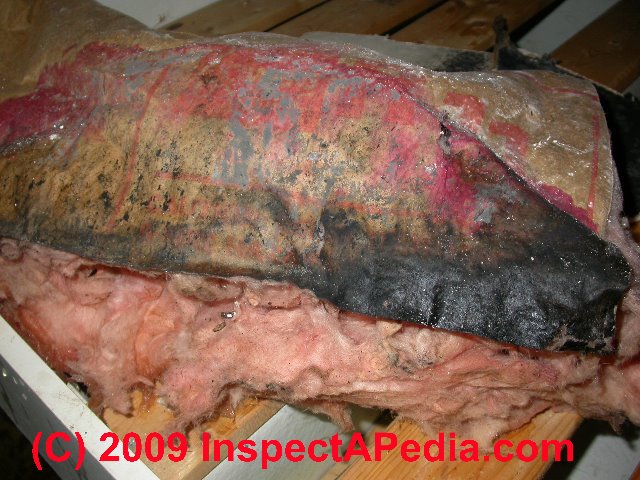
In our photo at above left we see black mold and other mold growths on the kraft paper facing of fiberglass building insulation. Our black mold photo at above right shows that mold colonies do not always grow in the neat round ring-like colonies shown in some our earlier photographs.
Black mold on drywall (C) Daniel Friedman Black mold on drywall (C) Daniel Friedman
Here we start to zoom in our photographs of black mold on building surfaces to show what mold colonies look like on close inspection in-situ. At left is mold on water stained drywall in a basement utility area. At right are small mold colonies that have appeared on a kitchen ceiling in just a few days after a heating system leak led to high indoor moisture and humidity levels.
Closeup of Black mold growth on drywall (C) Daniel Friedman Black mold under the microscope (C) Daniel Friedman
Much more closely we can examine an individual black mold colony on a painted drywall ceiling (above left). In the microscope at 1000x we can see individual spores of Stachybotrys chartarum - a well known black mold that is often found on indoor building surfaces.

Other Examples of What Mold Looks Like in Buildings

Question: Is this stuff on my ceiling mold?

Ceiling stains (C) InspectAPedia.com and L.B.I just moved into a rental trailer and it had a strong musty smell. I thought, maybe it hasn't been aired out. well, after two days of doors and windows open, it still smells. I found the brown discoloration on the ceiling in the kitchen cabinets. Is it mold? Thank you, - L.B. 

Reply: maybe not, but those water stains mean there may be a significant risk of hidden mold indoors

Your photo shows some heavy staining on what looks like suspended ceiling tiles. The brown stains themselves may not be mold but rather brown materials carried by roof leaks into the ceiling structure. Older trailers and mobile homes often have leaky roofs.
It looks as if water has also run down the wall surface and quite likely the wall cavity of the home below those same stains.
In this case the stains you see might not be mold but they do indicate that there is a high risk of mold in this home. Here are spots where I'd suspect a more hidden but possibly larger problem reservoir of mold when we see leak stains like yours:
  • The ceiling tiles may themselves be moldy on their upper or hidden surface, depending on what they are made-of. Even plastic-faced fiberglass suspended ceiling tiles that might not look moldy may in fact be contaminated if they have been wet.
    See INSULATION MOLD TEST.
  • The back side of wallpaper that has been soaked is often moldy.
    At HIDDEN MOLD in OTHER PLACES we include a photo of mold found behind wallpaper that looked just fine from the room side.
  • If the walls are covered with drywall behind that wallpaper, its cavity side may be moldy, though more likely your walls are paneled. Un-painted cavity side of wood paneling often supports mold growth and of course insulation within the wall cavity may be wet and moldy too.
  • Finally, where we see significant stains at a wall/ceiling juncture indicating a history of roof leaks that sent water into and down the wall, we take a close look at carpeting, carpet padding, and insulation that may be under the floor below.
I suggest having someone take a look at the insulation and floor condition in the area of leakage from below the mobile home. If that area is wet and damaged you can pretty much expect that there is hidden damage and mold in the ceiling and wall above.
If the damage is not so extensive that immediate major repairs to the structure are needed, but if there appears to be anything greater than 30 sq.ft. of moldy material, professional cleaning and repairs are needed. And the cleaning and repair work cannot be concluded before the leaks are fixed. 
Watch out: in some mobile homes where there has been chronic leakage we have seen floors that were badly deteriorated and even collapse.

Wednesday, October 15, 2014

Thursday, September 25, 2014

Mold Companies are not Regulated or Licensed in California

Mold Inspection Companies Are Not Regulated in California.


Mold inspection companies are not regulated in California. 

As a result of lack of regulation, the majority of mold inspectors are not properly certified, trained or experienced to provide adequate indoor air quality services that they are selling. Most of these inspectors have completed a one day class, and say they are certified based on a class attendance certificate. Their primary goal is to make money, rather than provide a high level of service.

THE CONSUMER MUST BEWARE.

As a nationally recognized expert in property and mold investigations, I have reviewed several other mold inspection company reports that lack current industry standards. Many of these inspectors have been referred by real estate agents, that are not aware of recommended certifications and experience required of a competent mold inspector. 

Here are some tips on making sure your mold inspection company is properly qualified.

1. What should a mold inspection cover?
The inspector should ensure that their inspection and inspection report will meet all applicable standards of a mold inspection: This typically includes a visual inspection of all accessible areas, moisture meter testing, and relative humidity measurements. It may or may not include thermal imaging, photos and a scope of work to explain how to stop the mold and remove the mold safely. In addition, your inspector should also be experienced in other indoor air quality issues that may be a potential health problems: Radon, allergens, VOC's, lead and asbestos. You should be able to request and see a copy of a sample report ahead of time and ask any questions you may have. If there are any areas you want to make sure are inspected, be sure to identify them upfront. For a sample report visit my website at: SAMPLE MOLD REPORT.

2. State of the Art Mold Testing:
Current state of the art mold testing should be available for your consideration; such as DNA analysis of the property condition e.g. the Environmental Relative Mold Index (ERMI), that has been in field for more than 7 years. The cost of this test has been decreased to the point that it is similar to the older and the less reliable approach of air testing. Recent research has also determined that even the best mold inspectors miss 52% of mold problems without the ERMI test. For more information on the ERMI test process visit a description at my website: ERMI

If your mold inspector is not familiar or negative about the ERMI, or other advanced DNA mold based testing techniques, this should be a warning sign to you.

Note that do it yourself mold tests sold at retailers or on-line are not valid or reliable.

3. Experience in the mold inspection profession.
The inspector should be able to provide his or her history in the profession and perhaps even a few names as referrals. This is a profession where experience counts; mold investigation is an ongoing scientific work in progress.
4. Experienced in residential and or commecial inspection.
Related experience in property inspection and certification by ASHI and or CREIA is a must. Accept no substitutes or excuses. To confirm ASHI or CREIA inspection certification visit: www.ashi.org or www.creia.org.
5. Repairs or remediation based on the inspection.
This is considered at code of ethics violation to offer both inspection and mold remediation. Your inspector should only inspect, that way there is no incentive to find a problem. If you want a referral from the inspector for a remediation company to remove the mold, make sure there is no formal business relationship or kick back.

6. Cost.
Costs vary dramatically, depending on the region, size and age of the project site, scope of services and other factors. Consider the value of the inspection in terms of the investment being made and or health concerns. Cost does not necessarily reflect quality.
Free does not mean free, since these inspections are performed by remediation companies who will up charge on the repair end, or charge high prices for mold testing.
7. The inspection report.
Ask to see report samples and determine whether or not you can understand the inspector's reporting style and if the time parameters fulfill your needs. Most inspectors provide their full report within 24-48 hours of the inspection or lab sample results. SAMPLE MOLD REPORT
8. Attend the inspection.
This is a valuable educational opportunity, and an inspector's refusal to allow this should raise a red flag. Never pass up this opportunity to see indoor air quality issues through the eyes of an expert.
9. Certification in Mold Investigation.
There are many questionable "certifications" for mold inspectors. The only nationally recognized true certification group is ACAC; visit www.acac.org to verify that your inspector is a Certified Microbial Consultant (CMC). My experience in California indicates that the overwhelming majority of mold inspectors are not ACAC certified and are poorly trained and qualified for the work they are offering; buyer beware; there is no license or government over site of inspectors or remediators.
10. Continuing education programs to keep your expertise up to date.
One can never know it all, and the inspector's commitment to continuing education is a good measure of his or her professionalism and service to the consumer. This is especially important in cases that involve health concerns. For example the ACAC certification requires at least 40 hours of approved education every 24 months.


About Steve Zivolich 
and
Guaranteed Property Inspections: www.gpinspect.com
Steve Zivolich, M.A., the owner/operator of Guaranteed Property Inspection and Mold Investigation Inc. has been providing property and environmental inspections for over 13 years in Orange County and Southern California.

Steve Z. has performed over 7,000 home inspections, mold, energy and environmental inspections and is fully certified and insured to meet all your inspection needs. He personally provides all field inspection services and as a result is able to maintain the highest Better Business Bureau rating of A+.

Steve has extensive training and years of experience as a home, mold, energy, radon, EMF/RF and environmental inspections,  that will guarantee that you receive the most thorough, state of the art and comprehensive inspection that follows current industry standards of practice and codes of ethics.

He conducts every inspection, as if he were moving his own family into the property. Steve also backs up every home inspection with a 90 day warranty, that is purchased on your behalf from American Home Warranty Association.

Unlike other home inspection companies, who will need to refer you to an environmental and/or energy audit contractor, Steve is a nationally certified expert that can handle the job without making you jump through hoops to hire additional people before the end of your inspection period, including the areas of: mold, asbestos, allergens, child safety, radon, formaldehyde, energy, EMF, water quality, and VOC's. 

As a result of his advanced training, he is able to offer a FREE energy audit and FREE limited mold investigation as well, with each home inspection.
.
Please take the time to read through Steve's home inspector credentials and qualifications as this is so important when hiring an inspector. www.gpinspect.com

Don't focus on price alone, focus on value, quality, experience and professionalism. When you hire an inspector, any inspector, you are hiring their individual knowledge, experience and qualifications so make sure you hire the best, not just the cheapest. We are confident that you will be Steve's next satisfied customer.

How to Pick a Mold Inspector or Tester

Tips on How to Pick a Mold Inspector


Ten Important Questions to Ask Your Potential Mold Inspector


1. What does your mold inspection cover?
The inspector should ensure that their inspection and inspection report will meet all applicable standards of a mold inspection: This typically includes a visual inspection of all accessible areas, moisture meter testing, and relative humidity measurements. It may or may not include a scope of work to explain how to stop the mold and remove the mold safely. In addition, your inspector should also be experienced in other indoor air quality issues that may be a potential health problems: Radon, allergens, VOC's, lead and asbestos. You should be able to request and see a copy of a sample report ahead of time and ask any questions you may have. If there are any areas you want to make sure are inspected, be sure to identify them upfront. For a sample report visit my website at: SAMPLE MOLD REPORT

Current state of the art mold testing should be available for your consideration; such as DNA analysis of the property condition e.g. Environmental Relative Mold Index (ERMI), that has been in field practice for more than 5 years, but still under the category of research by the EPA. Recent research has determined that mold inspectors miss 50% of mold problems without the ERMI test. For more information on the ERMI test process visit a description at my website: ERMI

2. How long have you been practicing in the mold inspection profession and how many inspections have you completed?
The inspector should be able to provide his or her history in the profession and perhaps even a few names as referrals.
3. Are you specifically experienced in residential and or commecial inspection?
Related experience in property inspection and certification by ASHI or CREIA is a must. Accept no substitutes or excuses. To confirm ASHI or CREIA inspection certification visit: www.ashi.org or www.creia.org.
4. Do you offer to do repairs or remediation based on the inspection?
This is consider at code of ethics violation to offer both inspection and remediation. Your inspector should only inspect, that way there is no incentive to find a problem. If you want a referral from the inspector for a remediation company to remove the mold, make sure there is no formal business relationship or kick back.
5. How long will the inspection take?
The average on-site inspection time for a single inspector is one to three hours for a typical single-family house; anything significantly less may not be enough time to perform a thorough inspection.
6. How much will it cost?
Costs vary dramatically, depending on the region, size and age of the project site, scope of services and other factors. Consider the value of the inspection in terms of the investment being made and or health concerns. Cost does not necessarily reflect quality.
7. What type of inspection report do you provide and how long will it take to receive the report?
Ask to see samples and determine whether or not you can understand the inspector's reporting style and if the time parameters fulfill your needs. Most inspectors provide their full report within 24 hours of the inspection or lab sample results. SAMPLE MOLD REPORT
8. Will I be able to attend the inspection?
This is a valuable educational opportunity, and an inspector's refusal to allow this should raise a red flag. Never pass up this opportunity to see indoor air quality issues through the eyes of an expert.
9. Do you maintain membership in a professional home inspector association?
There are many questionable "certifications" for mold inspectors. However, the only nationally recognized true certification group is ACAC; visit www.acac.org to verify that your inspector is a Certified Microbial Consultant (CMC). My experience in California indicates that most mold inspectors are poorly trained and qualified for the work they are offering; buyer beware; there is no license or over site of inspectors or remediators.
10. Do you participate in continuing education programs to keep your expertise up to date?
One can never know it all, and the inspector's commitment to continuing education is a good measure of his or her professionalism and service to the consumer. This is especially important in cases that involve health concerns. For example the ACAC certification requires at least 40 hours of approved education every 24 months.

Thursday, September 11, 2014

Buyers, Beware the Cheap Home or Mold Inspector


CALIFORNIA DOES NOT HAVE licensing requirements for home  or mold inspection companies, so they can vary in terms of training, certification, experience, integrity and quality. Your real estate agent may have suggestions for inspectors, but it's a good idea to also vet them yourself. Check out the American Society of Home Inspectors website (ashi.org) to find a home inspector or (ACAC.org) for a mold inspector in your area. Meanwhile, here's a look at the important questions to ask before hiring one.  
1. Do you perform repairs or just home or mold inspections? Some homebuyers seek the advice of a general contractor rather than a home inspector or a mold remediation company. That's a mistake, as they provide expertise from a different point of view. A home inspector is typically checking the roof or the appliances if they're included in the home, A general contractor is coming in from a repair standpoint and can quote for whatever repairs need to be done. A mold inspector determines if there is a problem; a remediation company removes the problem.  In fact, providing both services could create a conflict of interest, because buyers can't always distinguish between necessary repairs or the size of the mold problem.  IT IS ALSO AGAINST THE LAW IN CALIFORNIA FOR THE PERSON DOING THE HOME INSPECTION TO DO ANY REPAIRS ON THE HOME. THERE IS NO LAW AGAINST THIS CONFLICT OF INTEREST FOR MOLD INSPECTORS OR REMEDIATION COMPANIES.
2. Are you insured? A surprising number of home  and mold nspectors don't have insurance. They should have errors and omissions insurance in case there is something significant that they miss.
3. Can you provide references? It's a good idea to check the inspection company's references, Ask previous clients about whether the inspector arrived on time and inspected all aspects of the house.
4. Can I tag along on the inspection? Some home buyers leave the inspectors alone to examine the home, while others want to be more hands-on and follow along as the inspector works. If you fall into the latter camp, which several experts recommended, make sure your inspector is willing to walk you through the process. 
5. What does the inspection include? To compare inspectors, you need to know what the inspection includes (or doesn't include). Ideally, the inspection should be as thorough as possible. 
6. Will you send me an inspection report? The inspector should send you a detailed report after completing the inspection. 
7. Do you have any special expertise? If you're buying a special type of property, such as a historic home or new construction, make sure the inspector understands the special considerations for those types of properties. 
8. How much do you charge? Notice that price is the last question mentioned. That's because shopping on price alone may lead to cutting corners. You might be saving a couple of hundred dollars to hire the cheapest inspector, but you could be paying in a big way because the inspector wasn't thorough.

Saturday, July 26, 2014

Renters, Landlords, Property Managers and Mold


Attached is a summary video on the causes of unwanted moisture and mold growth in rental settings. Both unwanted and visible mold growth in living areas is considered unhealthy.

Mold in Rental Video

Thursday, July 24, 2014

Negative response to home and mold inspection findings.

My clients often get negative or unusual responses from some of my home and mold inspection findings. As a nationally certified and recognized home and mold expert, let me say I do make mistakes. But, like most inspectors, I call em as I see em.

My findings are my professional findings, and I put them in writing. If you get push back from others about your inspector findings:  home owners, realtors, other contractors, be sure to get their responses in writing.

Remember, that your inspector should be their only for you. We cannot have multiple clients, nor can we do any repairs.

Don't be bullied into thinking our findings are inaccurate, from others who have an emotional or financial interest in the sale of the property. Some new inspectors might be influenced by a bully, so be vigilant with such a professional.

Your inspector is their to protect your safety and interest in the property, so you know what you are getting.

Be carful out there.

Wednesday, June 25, 2014

How to Choose a Competent Mold Inspector

Mold inspectors are not regulated in California. 

As a result of a lack of regulation, the majority of mold inspectors are not properly certified, trained or experienced to provide adequate indoor air quality services that they are selling. Most of these inspectors have completed a one day class, and say they are certified based on a class attendance certificate; these are not professionally recognized certifications. These inspectors are not their for you, but for the money.

THE CONSUMER MUST BEWARE.

As a nationally recognized expert in property and mold investigations, I have reviewed several mold inspection reports from other inspectors  that lack current industry standards. Many of these inspectors have been referred by real estate agents, who are not aware of recommended certifications and experience required to choose a competent mold inspector. 

Here are Ten Important Questions to Help You Choose Your Potential Mold Inspector


1. What does your mold inspection cover?
The mold inspector should ensure that their inspection and written report will meet all applicable standards of a mold inspection: This typically includes a visual inspection of all accessible areas, moisture meter testing, and relative humidity measurements. It may or may not include a scope of work to explain how to stop the mold and remove the mold safely. In addition, your inspector should also be experienced in other indoor air quality issues that may be a potential health problems: e.g Radon, allergens, VOC's, lead and asbestos. You should be able to request and see a copy of a sample report ahead of time and ask any questions you may have. If there are any areas you want to make sure are inspected, be sure to identify them upfront. For a sample report visit my website at: SAMPLE MOLD REPORT

Current state of the art mold testing should be available for your consideration; such as DNA analysis of the property condition e.g. Environmental Relative Mold Index (ERMI), that has been in field practice for more than 5 years, but still under the category of research by the EPA. Recent research has determined that mold inspectors miss 50% of mold problems without the ERMI test. For more information on the ERMI test process visit a description at my website: ERMI

2. How long have you been practicing in the mold inspection profession and how many inspections have you completed?
The inspector should be able to provide his or her history in the profession and perhaps even a few names as referrals. Be careful, most "mold inspectors" have had no more than a one day training.

3. Are you specifically experienced in residential and or commecial inspection?
Related experience in property inspection and certification by ASHI or CREIA is a must. Accept no substitutes or excuses. To confirm ASHI or CREIA inspection certification visit: www.ashi.org or www.creia.org.

4. Do you offer to do repairs or remediation based on the inspection?
This is consider a code of ethics violation to offer both inspection and remediation. Your inspector should only inspect, that way there is no incentive to find a problem. If you want a referral from the inspector for a remediation company to remove the mold, make sure there is no formal business relationship or kick back.

5. How long will the inspection take?
The average on-site inspection time for a single inspector is one to three hours for a typical single-family house; anything significantly less may not be enough time to perform a thorough inspection.

6. How much will it cost?
Costs vary dramatically, depending on the region, size and age of the project site, scope of services and other factors. Consider the value of the inspection in terms of the investment being made and or health concerns. Cost does not necessarily reflect quality.

7. What type of inspection report do you provide and how long will it take to receive the report?
Ask to see samples and determine whether or not you can understand the inspector's reporting style and if the time parameters fulfill your needs. Most inspectors provide their full report within 24 hours of the inspection or lab sample results. SAMPLE MOLD REPORT

8. Will I be able to attend the inspection?
This is a valuable educational opportunity, and an inspector's refusal to allow this should raise a red flag. Never pass up this opportunity to see indoor air quality issues through the eyes of an expert.

9. Do you maintain membership in a professional home inspector association?
There are many bogus "certifications" for mold inspectors. The only nationally recognized true certification group is ACAC; visit www.acac.org to verify that your inspector is a Certified Microbial Consultant (CMC). My experience indicates that most mold inspectors are poorly trained and under qualified for the work they are offering; buyer beware; there is no California license or over site of inspectors or remediates.

10. Do you participate in continuing education programs to keep your expertise up to date?
One can never know it all, and the inspector's commitment to continuing education is a good measure of his or her professionalism and service to the consumer. This is especially important in cases that involve health concerns. For example the ACAC certification requires at least 40 hours of approved education every 24 months.