Showing posts with label Sebastopol. Show all posts

Wednesday, October 28, 2015

Top deal-breaker problems in home inspections

The home inspection is a critical stage of the home buying process. It’s an essential step for any buyer and can cause numerous deals to fall apart if any nasty surprises are uncovered. 


Both buyers and sellers should be aware of the types of deal-breaking problems that can crop up in a home inspection.

#3 – “Structural Problems” 
The buyer knows the job is a fixer-upper but comes across more problems than anticipated. They know they’re going to have to carry out basic repairs, but often times in run-down homes there are bigger problems – we’re talking about structural issues, problems with drainage and so on that will cost thousands of dollars to repair. In such cases, these finds can quickly become a deal-killer.

#2 – Expensive Repairs 

Properties of around 20-years old are usually in good condition, but there are many systems that need replacing after this time frame, including the roof, decking, boiler, appliances and so on. Other things like hardwood finishes and carpets may also need fixing, and many buyers are caught out by the length of the maintenance list.

#1 – Cover-ups 

The number one deal-breaker is cover-ups, where previous homeowners may have taken short-cuts on renovations and repairs. Homes which were bought to be flipped often come with nasty surprises like this, wherein the flipper has simply covered up bigger problems like chronic damp, mold or structural issues. 

Tuesday, September 29, 2015

Caveat Emptor: The Home Inspector

You've found your dream home in the perfect neighborhood. The neighbors are friendly, as are their kids and dogs, the schools are nearby and the price is even below what you were expecting. But wait, you have one more major hurdle before this slice of Norman Rockwell becomes reality: the home inspection, for which the Latin saying "Caveat emptor (let the buyer beware)" was invented.

Common "surprises" inspections uncover include: poor exterior grading, which can lead to basement flooding or leaking; roof leaks; improper wiring; plumbing issues; and heating system malfunctions.
The seemingly every day problems can often prove to be the biggest disasters -- and deal-breakers.
Most of the issues inspectors encounter are relatively simple and can be easily dealt with. But sometimes the cost of fixing these small things can be major. One way the potential buyer can protect him or herself is to make sure, when making an offer on a house, the contract includes a home inspection contingency. This is to ensure, if a costly problem is found, you can require the seller make the repair before the deal closes, negotiate a price reduction to make up for the cost of making the repair yourself, or go look at some different houses altogether.
If a potential buyer balks at the cost of hiring a professional inspector, they should realize that it's a small price to pay, considering what you're gaining. Inspectors tend to base their fee on the square footage of the home being inspected, as well as how complicated the job is...
Buyers can find a certified inspector through the American Society of Home Inspectors (ASHI).

Saturday, August 29, 2015

Should I Use the Home Inspector Recommended from My Real Estate Agent

Sometimes Yes, sometimes maybe not.

If you confirm that the home inspector is certified by CREIA or ASHI, you are likely in good hands. These certified inspectors are fully qualified and experience in home inspections. You can confirm their certification by going to CREIA.org or ASHI.org.

If however they are not certified by one or both of these groups, then you should probably pass on your realtors recommendation, and find a CREIA or ASHI certificate in your area. Both websites above have a zip code finder for your use.

Do not be fooled by other agency so called certifications, they are not accredited certifications.

Saturday, August 22, 2015

ASHI Home Inspector, the only Accredited Certification by the National Commission for Certifying Agencies


The American Society of Home Inspectors (ASHI) has been approved by the National Commission for Certifying Agencies (NCCA) as a recognized accrediting association for its profession-leading Certified Inspector Program.  

ASHI is now the only accredited home inspection association whose full members have completed a recognized third-party certification process.  All current, full ASHI members have met there quirements for this new certification.  


"The accreditation and certification of ASHI's processes by are cognized third party is an affirmation of the status we hold in the home inspection profession," said Jeff Arnold, executive director,ASHI.  "Our members are recognized as leaders in home inspection by those in and out of the profession and by government entities.  And,achieving certification further validates ASHI member qualifications and professional competence."

ASHI standards for certification are more stringent than other home inspection organizations.  New home inspector members join ASHI as Associates and must accomplish several tasks to become ASHI Certified Inspectors.  Associate members must pass the National Home Inspector's Examination; complete the ASHI Standards of Practice and Code of Ethics education module, undergo an inspection report verification process and conduct 250 paid home inspections.  To remain active in the organization, all members must complete a minimum of 20 hours of continuing education each year. 

"ASHI sets the professional standard on a national level," said Bill Richardson, 2009 ASHI president.  "In an environment where home inspection regulation and licensing are typically performed at a state level and have been at times granted for meeting minimal professional requirements, this national certification denotes a more advanced level of knowledge and practice skill required to become an ASHI Certified Inspector." Richardson added, "It also helps consumers make informed buying decisions and gives them peace of mind when they choose to hire an ASHI Certified Home Inspector."  

ASHI's organizational structure and membership process was thoroughly evaluated by the NCCA Board for compliance with what it requires of a responsible professional accrediting society.

According to Brendan Ryan, ASHI Certified Inspector and Certification Committee chair, "This evaluation process has taken other types of associations up to five years to complete. Due to ASHI's existing structure, standards and ethics, the process was completed in less than two years." 

The NCCA is the professional services accreditation arm of the Institute for Credentialing Excellence.  ASHI chose the organization because it is a recognized leader in setting quality standards for credentialing organizations.  The NCCA requires compliance with 21Standards, each of which has multiple components, in order to grant accreditation status to any association.


About Steve Zivolich and Guaranteed Property Inspections: www.gpinspect.com
Steve Zivolich, M.A., the owner/operator of Guaranteed Property Inspection and Mold Investigation Inc. has been providing property and environmental inspections for over 13 years in Orange County and Southern California.
Steve Z. has performed over 6,000 home inspections, mold, energy and environmental inspections and is fully certified and insured to meet all your inspection needs. He personally provides all field inspection services and as a result is able to maintain the highest Better Business Bureau rating of A+.
Steve has extensive training and years of experience as a home, mold, energy and environmental inspector that will guarantee that you receive the most thorough, state of the art and comprehensive inspection that follows current industry standards of practice and codes of ethics, a true value and education at a fair price. He conducts every inspection, as if he were moving his own family into the property. Steve also backs up every home inspection with a 90 day warranty, that is purchased on your behalf from American Home Warranty Association.
Unlike other home inspection companies, who will need to refer you to an environmental and/or energy audit contractor, Steve is a nationally certified expert that can handle the job without making you jump through hoops to hire additional people before the end of your inspection period, including the areas of: mold, asbestos, allergens, child safety, radon, formaldehyde, energy, EMF, water quality, and VOC's. As a result of his advanced training, he is able to offer a FREE energy audit and FREE mold investigation as well, with each home inspection.
.
Please take the time to read through Steve's home inspector credentials and qualifications as this is so important when hiring an inspector. Don't focus on price alone, focus on value, quality, experience and professionalism. When you hire an inspector, any inspector, you are hiring their individual knowledge, experience and qualifications so make sure you hire the best, not just the cheapest. We are confident that you will be Steve's next satisfied customer.

Wednesday, August 19, 2015

Best Home Inspection Award

Steve Zivolich, Guaranteed Property and Mold Inspections, Inc.,  Receives 2015 Best of Irvine Award

IRVINE August 19, 2015 -- Steve Zivolich, MA, ACI, CMC, CCI has been selected for the 2015 Best of Irvine Award in the Building Inspection Services category by the Irvine Award Program.
Each year, the Irvine Award Program identifies companies that we believe have achieved exceptional marketing success in their local community and business category. These are local companies that enhance the positive image of small business through service to their customers and our community. These exceptional companies help make the Irvine area a great place to live, work and play.
Various sources of information were gathered and analyzed to choose the winners in each category. The 2015 Irvine Award Program focuses on quality, not quantity. Winners are determined based on the information gathered both internally by the Irvine Award Program and data provided by third parties.
About Irvine Award Program
The Irvine Award Program is an annual awards program honoring the achievements and accomplishments of local businesses throughout the Irvine area. Recognition is given to those companies that have shown the ability to use their best practices and implemented programs to generate competitive advantages and long-term value.
The Irvine Award Program was established to recognize the best of local businesses in our community. Our organization works exclusively with local business owners, trade groups, professional associations and other business advertising and marketing groups. Our mission is to recognize the small business community's contributions to the U.S. economy.

Tuesday, August 18, 2015

Smart questions to ask before hiring your home inspector.


  1. Are you certified?
     Make sure they belong to the American Society of Home Inspectors. This shows they can be trusted and are professional.

  2. What will the inspection cover? Every inspection is different, ask for copies of previous home inspections so you can see what will be inspected inside the home. Let them know if you have concerns in certain areas.

  3. How long will the inspection take? The average on-site inspection time for a single inspector is two to three hours for a typical single-family house; anything significantly less may not be enough time to perform a thorough inspection.

  4. Will I be able to attend the inspection? This is a valuable educational opportunity, and an inspector’s refusal to allow this should raise a red flag. Never pass up this opportunity to see your prospective home through the eyes of an expert.

  5. How long have you been practicing in the home inspection profession and how many inspections have you completed? The inspector should be able to provide his or her history in the profession and perhaps even a few names as referrals. Newer inspectors can be very qualified, and many work with a partner or have access to more experienced inspectors to assist them in the inspection.

Monday, August 17, 2015

Let the Buyer Beware: Finding A Good Home Inspector


You've found your dream home in the perfect neighborhood. The neighbors are friendly, as are their kids and dogs, the schools are nearby and the price is even below what you were expecting. You can practically picture the fireplace mantel inside covered with family photos and smell the apple pie baking in the state-of-the-art kitchen. But wait, you have one more major hurdle: the home inspection, for which the Latin saying "Caveat emptor (let the buyer beware)" was invented.
Every house has its surprises...
Common "surprises" inspections uncover include: poor exterior grading, which can lead to basement flooding or leaking; roof leaks; improper wiring; plumbing issues; and heating system malfunctions.
Most of the issues inspectors encounter are relatively simple and can be easily dealt with. But sometimes the cost of fixing these small things can be major. One way the potential buyer can protect him or herself is to make sure, when making an offer on a house, the contract includes a home inspection contingency. This is to ensure, if a costly problem is found, you can require the seller make the repair before the deal closes, negotiate a price reduction to make up for the cost of making the repair yourself, or go look at some different houses altogether.
If a potential buyer balks at the cost of hiring a professional inspector, they should realize that it's a small price to pay, considering what you're gaining. Inspectors tend to base their fee on the square footage of the home being inspected, as well as how complicated the job is. According to Vento, the national average runs $300-$500, but can top $1,000 if the job is a big one.
Buyers can find a certified inspector through their real estate agent, although many consumers prefer to find one themselves, so they can be assured of total objectivity in their inspection. In addition to friends, neighbors and relatives, prospective home buyers can contact national organizations, such as the American Society of Home Inspectors (ASHI).

Berkeley enacts balcony safety requirements

A Smart Idea for Sonoma County


Workers cut away a strip of outer stucco while preparing a balcony for removal outside a residential apartment building in Berkeley.
BERKELEY -- Starting July, several thousand properties are now subject to periodic inspections of decks and other exposed structures under new rules crafted in response to the June 16 collapse of a fifth-floor balcony at a downtown apartment complex that killed six young adults and injured seven more.
The City Council on Tuesday approved urgency ordinances that require property owners to hire a licensed expert to inspect and certify the structural integrity of decks, balconies, staircases, landings and other weather-exposed areas within six months, and thereafter every three years. The ordinances apply to any residential building with more than three units.
Industry representatives warned that acting prematurely and hastily and without input from experts could have unanticipated and adverse outcomes. But a sense of urgency that the city must take firm action in response to the disaster and do something to protect the public against the possibility of similar ones occurring prevailed throughout the night's often-passionate debate.


The mandated inspections would be performed by a licensed general contractor, structural pest control specialist, architect or engineer. Several residents questioned how the city staff would be able to oversee the program given its current resources.
Councilman Laurie Capitelli suggested enlisting the help of the American Society of Home Inspectors, noting that it had done private inspections of 14 balconies in the city's Elmwood section since the accident and had recommended two of those balconies for closure.
NEW RULES New inspection rules:
Existing decks, balconies, landings and other weather-exposed areas must be inspected and certified by a licensed expert within six months, and thereafter every three years
New building standards:
  • set standards for ventilation of weather-exposed structures such as balconies, landings, decks and stairs.
  • require balconies, landings, decks and stairs to be constructed of naturally durable or preservative-treated wood, corrosion-resistant steel or similar approved materials.
  • require wood members that support the floors be separated from them by an impervious moisture barrier.
  • apply to any residential building with more than three units.

Monday, March 16, 2015

Guaranteed Property Inspection & Mold Investigation Inc Receives 2014 Best Businesses of Irvine Award

Press Release

Press Release
FOR IMMEDIATE RELEASE
Guaranteed Property Inspection & Mold Investigation Inc Receives 2014 Best Businesses of Irvine Award
Irvine Award Program Honors the Achievement
Irvine, January 9, 2015 — Guaranteed Property Inspection & Mold Investigation Inc has been selected for the 2014 Best Businesses of Irvine Award in the Home Inspectors category by the Best Businesses of Irvine Award Program.
Each year, the Best Businesses of Irvine Award Program identifies companies that we believe have achieved exceptional marketing success in their local community and business category. These are local companies that enhance the positive image of small business through service to their customers and our community. These exceptional companies help make the Irvine area a great place to live, work and play.
Various sources of information were gathered and analyzed to choose the winners in each category. The 2014 Best Businesses of Irvine Award Program focuses on quality, not quantity. Winners are determined based on the information gathered both internally by the Best Businesses of Irvine Award Program and data provided by third parties.
About the Best Businesses of Irvine Award Program
The Best Businesses of Irvine Award Program is an annual awards program honoring the achievements and accomplishments of local businesses throughout the Irvine area. Recognition is given to those companies that have shown the ability to use their best practices and implemented programs to generate competitive advantages and long-term value.
The Best Businesses of Irvine Award Program was established to recognize the best of local businesses in our community. Our organization works exclusively with local business owners, trade groups, professional associations and other business advertising and marketing groups. Our mission is to recognize the small business community’s contributions to the U.S. economy.
SOURCE: Best Businesses of Irvine Award Program
CONTACT:
Best Businesses of Irvine Award Program
Email: PublicRelations@BestBusinesses.biz
URL: http://www.BestBusinesses.biz
###

Sunday, March 15, 2015

Results of Formaldehyde Testing of Building Liquidator Flooring

We have tested a number of homes for formaldehyde gas levels that have Building Liquidator flooring installed.

Our results so far show formaldehyde levels ranging from .095 ppm to .045 ppm.

These levels are  above California standard of .05 ppm., or within within the standard deviation. In addition, these levels are within the standard deviation of acceptable EPA levels of .1 ppm.

We have recommended that our clients take prompt action; e.g. removing the flooring promptly.

To test for formaldehyde in a home we use the following process that is conducted by a Certified Microbial Consultant. We charge $275 (in the Orange County area of California); which includes the test and written test results from an AHIA lab. Results take about 48 to 72 hours.


Formaldehyde Vapor Monitor

General
The Formaldehyde Vapor Monitor is used to measure personal exposure or room concentrations. This monitoring badge will be accepted in as accurate in any inspection or dispute, because it is validated for accuracy, and analyzed in an AIHA-LAP, LLC accredited laboratory.

Indoor Air Quality
For measurement of indoor air quality, The EPA and The American Lung Assoc. recommend a maximum level of 0.1 ppm; California recommend 0.05 ppm. Some people may be sensitive to lower levels. The monitoring badge is placed in a room with suspect flooring for about 24 hours. Then it will be accurate at a level of 0.003 ppm (3 parts per billion). For a 48 hour exposure, the minimum level is even lower.


OSHA Regulations
Each person who uses formaldehyde as a regular part of their job must have their exposure monitored periodically, according to OSHA regulations. 
There are two conditions that must be met to comply with the OSHA Standards for personal exposure in the workplace. First, the concentration for an 8 hour period must be less than 0.75 ppm. Second, the maximum exposure during any 15 minute interval must be less than 2.0 ppm. There is also an “action level” at 0.5 ppm for an 8 hour period. Above the action level more frequent monitoring is needed to avoid the need for protective equipment and for medical testing. 
The Formaldehyde Vapor Monitor meets OSHA accuracy requirements for both the full shift and short-term measurements.

Principle of Operation
Collection of formaldehyde vapor by diffusion in the monitor and collection on a chemical activated solid adsorbent. Analysis is done by methods validated for accuracy by The Occupational Safety & Health Administration (OSHA) and by The National Institute of Occupational Safety & Health (NIOSH).

Thursday, March 12, 2015

Formaldehyde Testing of Building Liquidators Flooring.

Yes we provide this type of testing.

The NIOSH approve testing cost is $195.

The test should be conducted for at least 24 hours.

Thursday, November 27, 2014

What mold contamination looks like in a home

Photographs to Help Identify Mold in Buildings - What mold contamination looks like in a home

Directories of 6 atlases or indices of building mold

Black mold on drywall (C) Daniel Friedman
  1. MOLD ATLAS & PARTICLES INDEX - A-to-Z Mold Atlas of Indoor Clinical Mold, Pathogens, Allergens & Other Indoor Particles
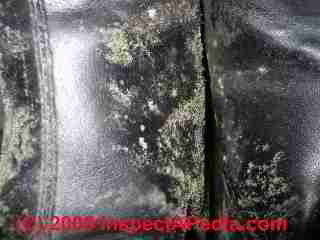
  2. MOLD APPEARANCE - WHAT MOLD LOOKS LIKE - What Does Black or Dark Indoor Mold Look Like? Black Mold spores in the Home - a Photo ID Library. What toxic black mold or other indoor mold looks like in buildings.
  3. MOLD GROWTH on SURFACES, PHOTOS - What Does Mold Look Like on Various Materials & Surfaces? An extensive photographic guide to mold as it is found growing on various building materials & surfaces.

    Also see MOLD GROWTH on SURFACES, TABLE OF - a Table of Kinds of Mold Growth Found on Building Surfaces, lists mold genera/species most often found on specific building surfaces, materials, or contents
  4. MOLD in the PETRI DISH, PHOTOS. - Photographs of Mold Growing on Petri Dishes or Mold Culture Plates or Settlement Plates
  5. MOLD by MICROSCOPE - Mold spores under the Microscope - a Photo ID Library for detection and identification of toxic or other mold
  6. MOLD RELATED ILLNESS SYMPTOMS - Mold Related Illness: Index of Symptoms. Readers should not rely on this document for medical diagnosis and instead should consult with their physician or with a specialist such as a medical toxicologist

Identification Photographs of Black Mold in Buildings - what does black mold look like?

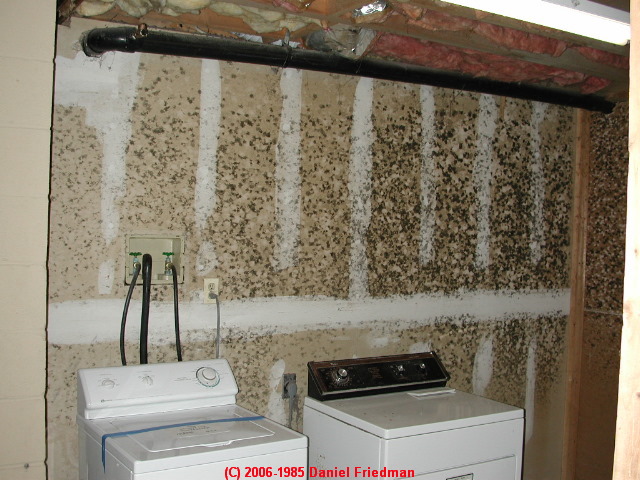
Mold on basement laundry room wall - Daniel Friedman 04-11-01
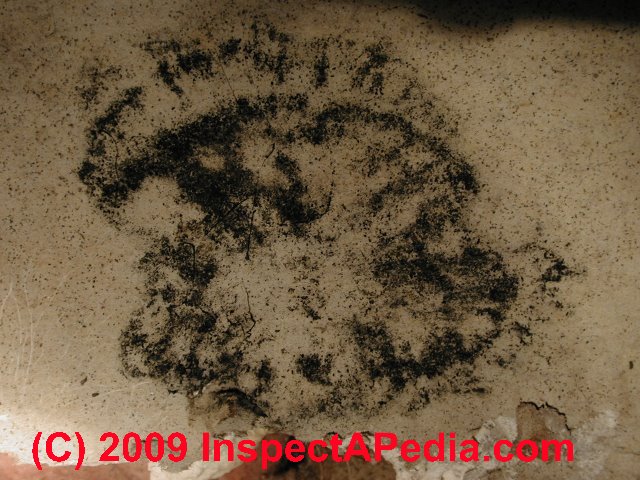
Black mold in the laundry room
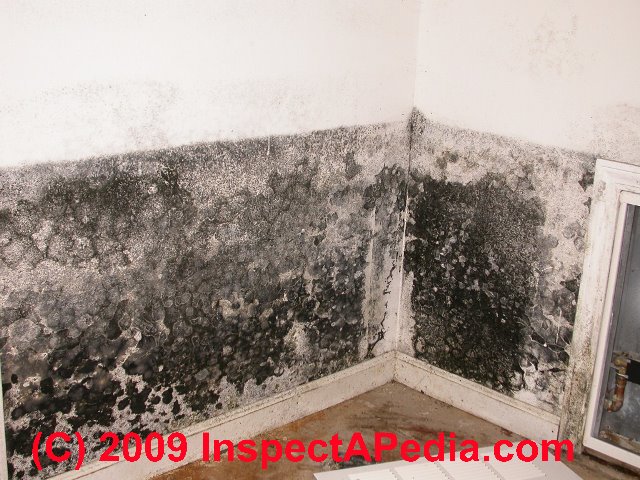
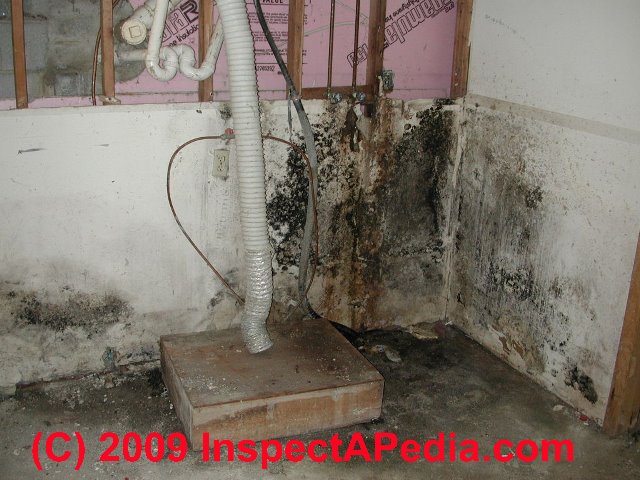
 may look like this extensive case. In cases of large areas of visible mold, unless the mold proves to be only cosmetic mold, professional cleaning is probably needed.
Look closely when inspecting or collecting test samples of "toxic black mold" because often there are other molds, sometimes more harmful and more easily airborne mold species on the same surface, on the hidden side of the same surface of drywall, or nearby.
These include lighter colored genera/species of Aspergillus sp., Penicillium sp. etc. which are too often missed when investigators or building owners focus only on "black mold" testing.

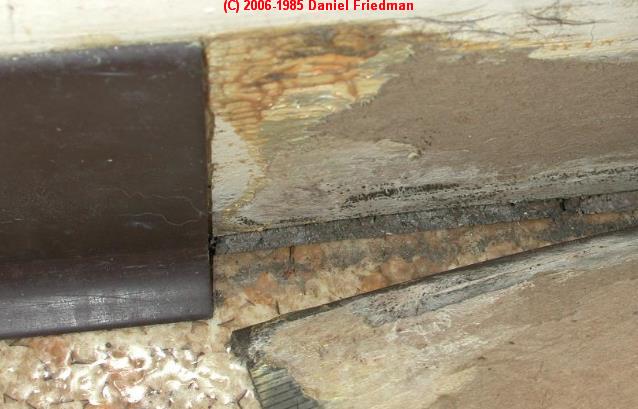
Stachybotrys behind baseboard - Daniel Friedman 04-11-01

Tiny Stachybotrys toxic black mold colony
 on drywall behind a laundry room baseboard. If this is all that's present this is a trivial cleanup and does not need testing and remediation.
But if this is a "tip of iceberg" clue of a larger hidden problem in the wall, or if it might be, further investigation, at least exploring the wall cavity, would be appropriate.


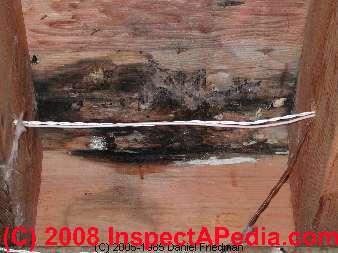
T Scriptis in rotting subfloor - Daniel Friedman 04-11-01
Black mold on rotting subfloor below a leaky sliding glass door - this "black mold" was Taeoniella rudus for which no medical issues have been reported - a wood rotting organism though.
An investigation of the source of outside leaks and extent of damage to the structure were needed at this building.
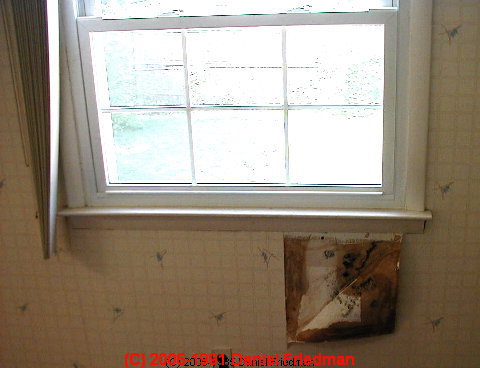
Black Stachybotrys chartarum black mold on wallpaper below a leaky window. The window had been left open more than once during rainy weather. We found that water was leaking into the wall cavity, not just behind the wallpaper.
Stachybotrys black mold on wallpaper - Daniel Friedman
04-11-01
Replacement of a small section of drywall, wall cavity insulation, and wallpaper were appropriate at this location where the first symptom was loose peeling wallpaper which exposed black mold.

Memnoniella echinata black mold in wall cav - Daniel Friedman
04-11-01
Toxic black mold, Memnoniella echinata
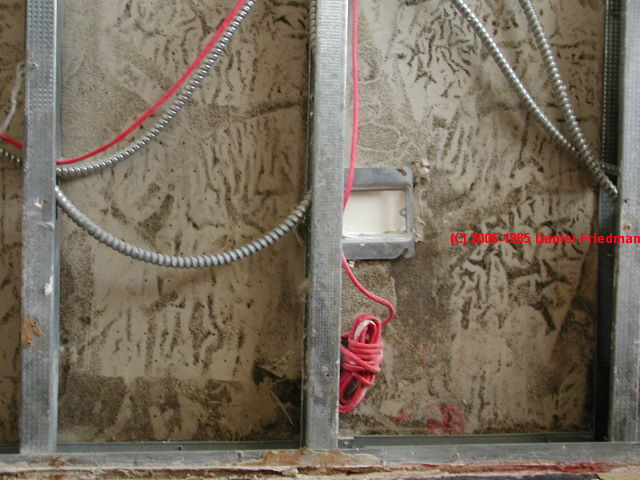
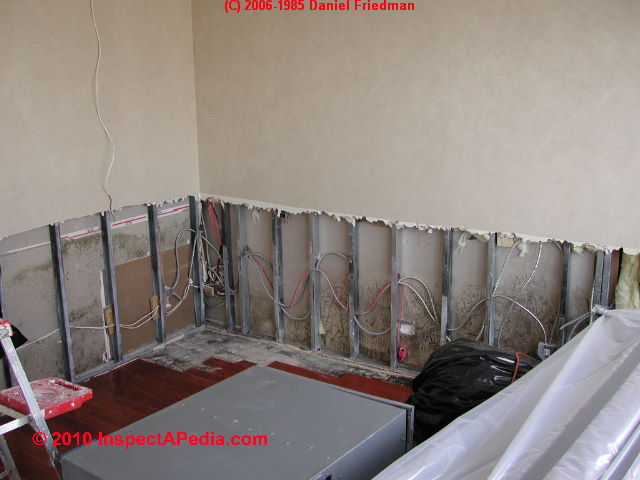
 visible at a small test cut into the wall cavity and contaminating fiberglass insulation in a NY City high rise apartment after water leaked from an A/C condensate line into the metal track of the metal-stud wall.
Larger wall cuts to look for hidden mold and final demolition exposed a very extensive toxic mold colony in this building. Lab processing of a tape sample of this mold was necessary to identify it.
Notice the funny black mold growth pattern on the cavity side of the opposing drywall. This pattern maps the points of contact of the wall insulation kraft paper with the drywall surface, and the movement of moisture and spreading mold growth on the wall surface. It is characteristic of wall cavity mold and is different from the growth pattern of mold growing on a freely exposed-to-air drywall surface.

extensive mold hidden in fiberglass insulated wall cavity -
Daniel Friedman 04-11-01Black and hidden mold in fiberglass wall insulation
 in a basement exposed to prolonged wet conditions from a wall leak at a water pipe entry point. This mold was almost hidden except for a small mold-suspect patch and larger water stains on the exposed side of the drywall.
The wall cut exposed a surprise point of water entry. Black mold was visible on the insulation kraft paper.
The problematic mold in this case was not visible but was found by a special sampling technique we used to examine the building insulation for Aspergillus sp. and Penicillium sp. (problem molds) in the fiberglass. 
It was found to be highly contaminated and was determined to be an active reservoir releasing high levels of airborne mold into the basement.

More Photos & Close ups of Black Mold on Building Surfaces 

Black mold on drywall (C) Daniel Friedman Black mold on drywall (C) Daniel Friedman
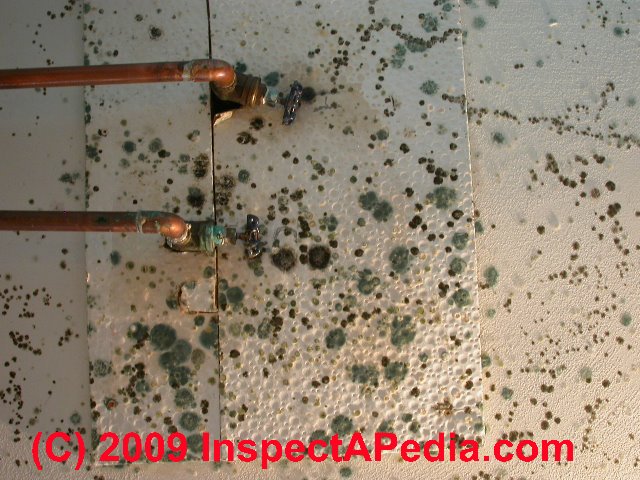
Our mold photo at above left shows black mold colonies growing among green mold colonies on a laundry room ceiling, covering both plastic ceiling tile material (around the plumbing pipes) and drywall. It is often the case that multiple mold genera/species may be growing in the same area, often on the same surface, and at times, on top of one another.
As we advised earlier, look closely when inspecting or collecting test samples of "toxic black mold" because often there are other molds, sometimes more harmful and more easily airborne mold species on the same surface, on the hidden side of the same surface of drywall, or nearby. In this building that was still wet at the time we took this photograph, the airborne level of Aspergillus sp. and Penicillium sp. (the green, gray, and light colored molds in the photo) was very high while the level of airborne Stachybotrys chartarumCladosporium sphaerospermum, and Nigrospora sp. (black molds found on these surfaces) was very low.
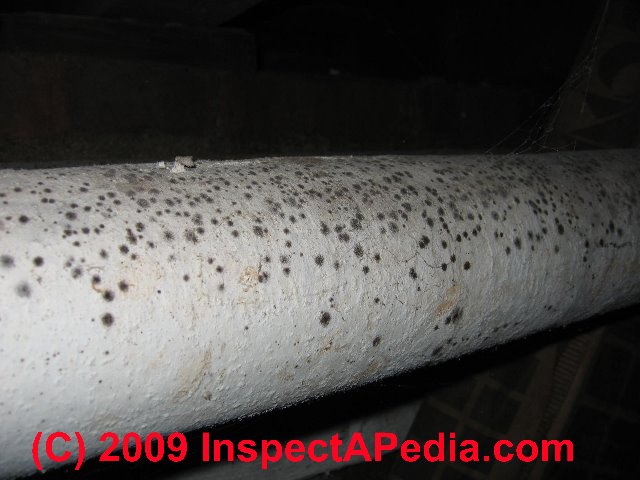
Our photo at above right shows black mold colonies as smaller "spots" growing on the painted surface of cloth covering asbestos pipe insulation.
Black mold on drywall (C) Daniel Friedman Black mold on drywall (C) Daniel Friedman
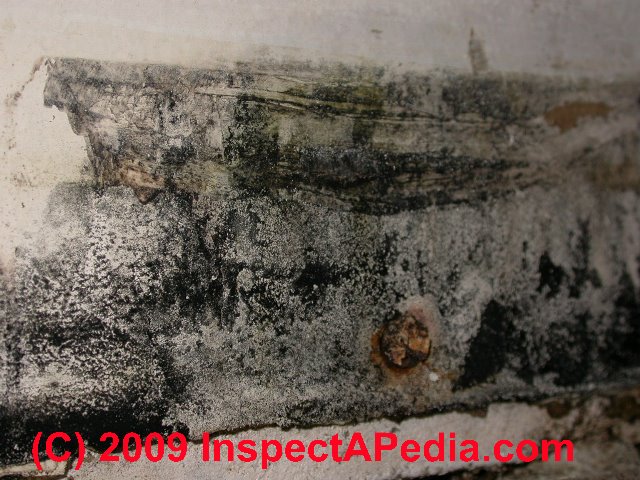
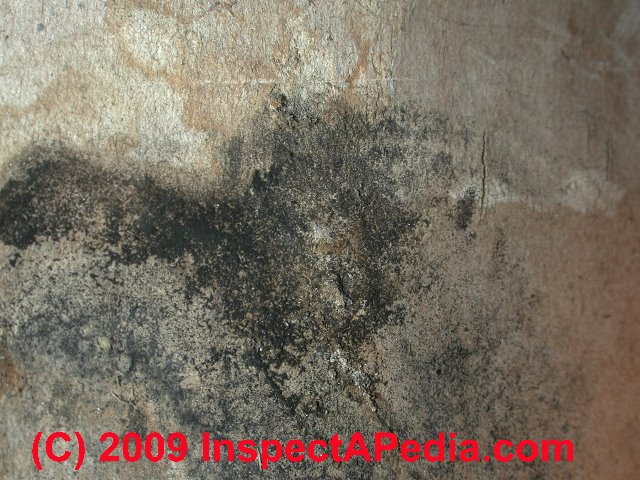
Our black mold photos above show dense black fungal growth on drywall (black mold on Sheetrock™ type wall surfaces) in areas that have been very wet. The distinct top edge of mold growth may mark a flood water level or a discontinuity in the wall material, such as a tape joint in drywall that affected the moisture gradient in the wall and thus the mold growth pattern.

Close up Photographs of Black Mold on Building Surfaces

Black mold on drywall (C) Daniel Friedman Black mold on drywall (C) Daniel Friedman
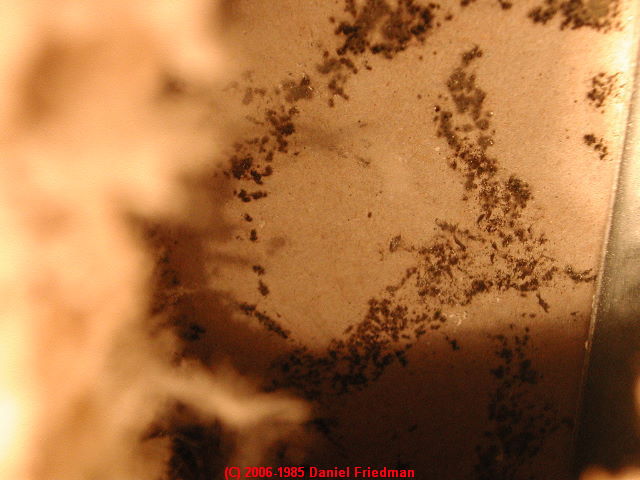
Here we begin to "zoom in for a closer look at dense black mold growth on indoor building surfaces in a wet basement. Notice that the mold growth on drywall and often on other surfaces includes a family of circular growth patterns (upper area of photo at above right) until the mold growth has expanded to form a solid black covering (left wall of photo at left and lower wall of black mold in photo at right).
Black mold on drywall (C) Daniel Friedman Black mold on drywall (C) Daniel Friedman
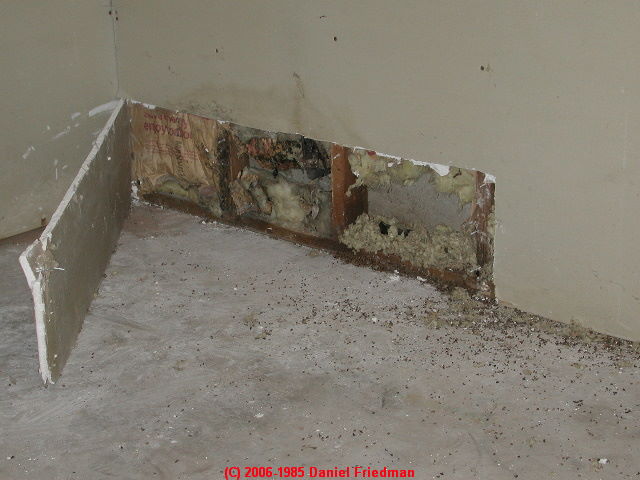
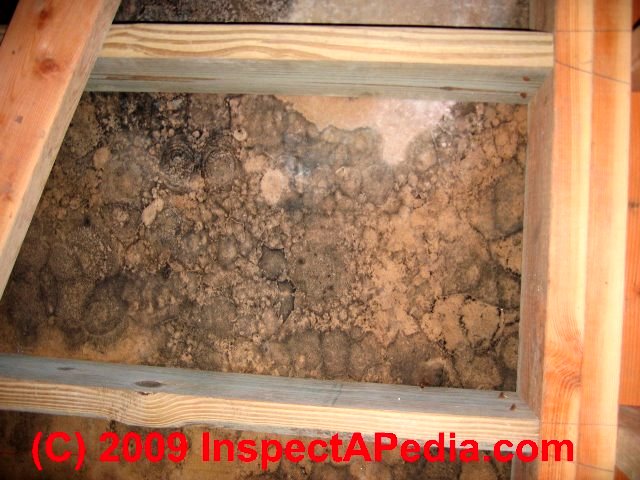
Our photo at above left shows black mold colonies as individual rounded "rings" on the cavity side of drywall on a building crawl area wall. The black mold photo at right shows how dense black mold may be hidden from view behind wall baseboard trim (removed for this picture) in a building that has suffered wet floors.
Black mold on furniture (C) Daniel Friedman Black mold on canvas clothing or bag (C) Daniel Friedman
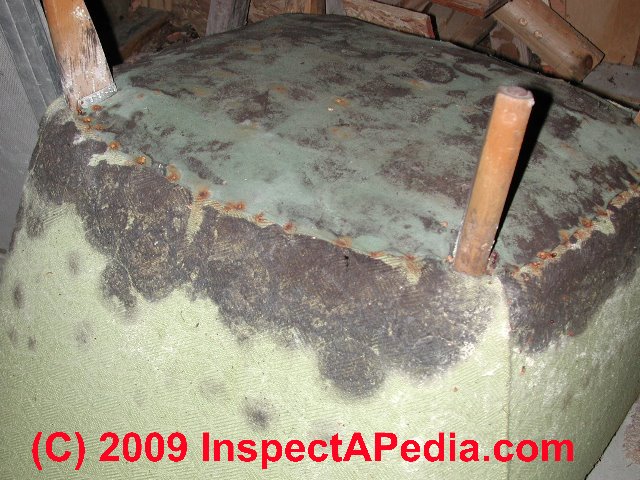
Black mold growth on furniture is obvious in these two photographs, of a mold on a leatherette surface (left) and on an upholstered chair (right).
Black mold on drywall (C) Daniel Friedman Black mold on drywall (C) Daniel Friedman
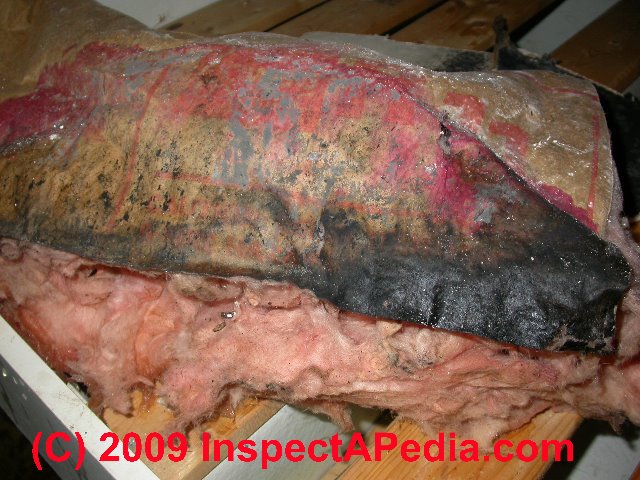
In our photo at above left we see black mold and other mold growths on the kraft paper facing of fiberglass building insulation. Our black mold photo at above right shows that mold colonies do not always grow in the neat round ring-like colonies shown in some our earlier photographs.
Black mold on drywall (C) Daniel Friedman Black mold on drywall (C) Daniel Friedman
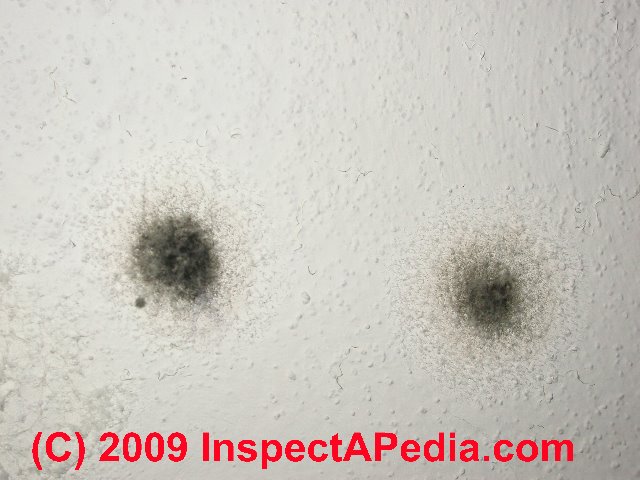
Here we start to zoom in our photographs of black mold on building surfaces to show what mold colonies look like on close inspection in-situ. At left is mold on water stained drywall in a basement utility area. At right are small mold colonies that have appeared on a kitchen ceiling in just a few days after a heating system leak led to high indoor moisture and humidity levels.
Closeup of Black mold growth on drywall (C) Daniel Friedman Black mold under the microscope (C) Daniel Friedman
Much more closely we can examine an individual black mold colony on a painted drywall ceiling (above left). In the microscope at 1000x we can see individual spores of Stachybotrys chartarum - a well known black mold that is often found on indoor building surfaces.

Other Examples of What Mold Looks Like in Buildings

Question: Is this stuff on my ceiling mold?

Ceiling stains (C) InspectAPedia.com and L.B.I just moved into a rental trailer and it had a strong musty smell. I thought, maybe it hasn't been aired out. well, after two days of doors and windows open, it still smells. I found the brown discoloration on the ceiling in the kitchen cabinets. Is it mold? Thank you, - L.B. 

Reply: maybe not, but those water stains mean there may be a significant risk of hidden mold indoors

Your photo shows some heavy staining on what looks like suspended ceiling tiles. The brown stains themselves may not be mold but rather brown materials carried by roof leaks into the ceiling structure. Older trailers and mobile homes often have leaky roofs.
It looks as if water has also run down the wall surface and quite likely the wall cavity of the home below those same stains.
In this case the stains you see might not be mold but they do indicate that there is a high risk of mold in this home. Here are spots where I'd suspect a more hidden but possibly larger problem reservoir of mold when we see leak stains like yours:
  • The ceiling tiles may themselves be moldy on their upper or hidden surface, depending on what they are made-of. Even plastic-faced fiberglass suspended ceiling tiles that might not look moldy may in fact be contaminated if they have been wet.
    See INSULATION MOLD TEST.
  • The back side of wallpaper that has been soaked is often moldy.
    At HIDDEN MOLD in OTHER PLACES we include a photo of mold found behind wallpaper that looked just fine from the room side.
  • If the walls are covered with drywall behind that wallpaper, its cavity side may be moldy, though more likely your walls are paneled. Un-painted cavity side of wood paneling often supports mold growth and of course insulation within the wall cavity may be wet and moldy too.
  • Finally, where we see significant stains at a wall/ceiling juncture indicating a history of roof leaks that sent water into and down the wall, we take a close look at carpeting, carpet padding, and insulation that may be under the floor below.
I suggest having someone take a look at the insulation and floor condition in the area of leakage from below the mobile home. If that area is wet and damaged you can pretty much expect that there is hidden damage and mold in the ceiling and wall above.
If the damage is not so extensive that immediate major repairs to the structure are needed, but if there appears to be anything greater than 30 sq.ft. of moldy material, professional cleaning and repairs are needed. And the cleaning and repair work cannot be concluded before the leaks are fixed. 
Watch out: in some mobile homes where there has been chronic leakage we have seen floors that were badly deteriorated and even collapse.

Answers to Home Inspection Cost and Services

What is a home inspection?
A home inspection is an objective visual examination of the physical structure and systems of a house, from the roof to the foundation.


What does a home inspection include? 
The standard home inspector’s report will cover the condition of the home’s heating system; central air conditioning system (temperature permitting); interior plumbing and electrical systems; the roof, attic and visible insulation; walls, ceilings, floors, windows and doors; the foundation, basement and structural components.
The American Society of Home Inspectors (ASHI) publishes a Standards of Practiceand Code of Ethics that outlines what you should expect to be covered in your home inspection report.


Why do I need a home inspection?
Buying a home could be the largest single investment you will ever make. To minimize unpleasant surprises and unexpected difficulties, you’ll want to learn as much as you can about the newly constructed or existing house before you buy it. A home inspection may identify the need for major repairs or builder oversights, as well as the need for maintenance to keep it in good shape. After the inspection, you will know more about the house, which will allow you to make decisions with confidence.
If you already are a homeowner, a home inspection can identify problems in the making and suggest preventive measures that might help you avoid costly future repairs.
If you are planning to sell your home, a home inspection can give you the opportunity to make repairs that will put the house in better selling condition.


What will it cost?
The inspection fee for a typical one-family house varies geographically, as does the cost of housing. Similarly, within a given area, the inspection fee may vary depending on a number of factors such as the size of the house, its age and possible optional services such as septic, well or radon testing.

Do not let cost be a factor in deciding whether or not to have a home inspection or in the selection of your home inspector. The sense of security and knowledge gained from an inspection is well worth the cost, and the lowest-priced inspection is not necessarily a bargain. Use the inspector’s qualifications, including experience, training, compliance with your state’s regulations, if any, and professional affiliations as a guide.


Why can't I do it myself? 
Even the most experienced homeowner lacks the knowledge and expertise of a professional home inspector. An inspector is familiar with the elements of home construction, proper installation, maintenance and home safety. He or she knows how the home’s systems and components are intended to function together, as well as why they fail.

Above all, most buyers find it difficult to remain completely objective and unemotional about the house they really want, and this may have an effect on their judgment. For accurate information, it is best to obtain an impartial, third-party opinion by a professional in the field of home inspection.


Can a house fail a home inspection? 
No. A professional home inspection is an examination of the current condition of a house. It is not an appraisal, which determines market value. It is not a municipal inspection, which verifies local code compliance. A home inspector, therefore, will not pass or fail a house, but rather describe its physical condition and indicate what components and systems may need major repair or replacement.


What is ASHI?
Since 1976, ASHI has worked to build consumer awareness of home inspection and to enhance the professionalism of its membership. The ASHI Standards of Practice and Code of Ethics serves as a performance guideline for home inspectors, and is universally recognized and accepted by many professional and governmental bodies.
Back to top

Who belongs to ASHI? 
ASHI is an organization of independent, professional home inspectors who are required to make a commitment, from the day they join as ASHI Associates, to conduct inspections in accordance with the ASHI Standards of Practice and Code of Ethics, which prohibits engaging in conflict-of-interest activities that might compromise their objectivity. ASHI Associates work their way to ASHI Certified Inspector status as they meet rigorous requirements, including passing a comprehensive, written technical exam and performing a minimum of 250 professional, fee-paid home inspections conducted in accordance with the ASHI Standards of Practice and Code of Ethics. Mandatory continuing education helps the membership stay current with the latest in technology, materials and professional skills.
Back to top

When do I call a home inspector?
Typically, a home inspector is contacted immediately after the contract or purchase agreement has been signed. Before you sign, be sure there is an inspection clause in the sales contract, making your final purchase obligation contingent on the findings of a professional home inspection. This clause should specify the terms and conditions to which both the buyer and seller are obligated.
Back to top

Do I have to be there?
While it’s not required that you be present for the inspection, it is highly recommended. You will be able to observe the inspector and ask questions as you learn about the condition of the home and how to maintain it.
Back to top

What if the report reveals problems? 
No house is perfect. If the inspector identifies problems, it doesn’t mean you should or shouldn’t buy the house, only that you will know in advance what to expect. If your budget is tight, or if you don’t want to become involved in future repair work, this information will be important to you. If major problems are found, a seller may agree to make repairs.
Back to top

If the house proves to be in good condition, did I really need an inspection? 
Definitely. Now you can complete your home purchase with confidence. You’ll have learned many things about your new home from the inspector’s written report, and will have that information for future reference.
Back to top

Wednesday, November 26, 2014

Home Buying Mistake to Avoid: Skipping the Home Inspection

1. Using the wrong real estate agent. Just because your sister’s college roommate’s friend just got a real estate license doesn’t mean she’s the right agent for you. San Francisco real estate agent Herman Chan suggests vetting agents and looking for someone who does real estate full time and knows the local inventory. “You can lose an offer if you’re not responsive in a couple of hours,” he says. Request the agent’s sales data, and find out how he or she communicates. Chan recommends asking questions like these to gauge the agent’s tech-savyness: “Is it OK if I text you? Is it OK to DocuSign things? If I can’t make an open house on Sunday, can you shoot me a video?” If you prefer to check texts and emails on your phone, you may not want an agent who insists on faxing contracts.
2. Shopping before you get preapproved. Before you get serious about buying real estate, find out how much mortgage you qualify for and get a preapproval letter from your lender. “If you fall in love [with a property], write that offer and then find out you can’t afford it, it’s an emotional roller coaster you can’t afford,” Chan says. Many agents won’t even take buyers to showings until they have a preapproval letter for that very reason.
3. Maxing out your spending power. Qualifying for a half-million dollar mortgage does not mean you should buy a McMansion. Jon Sterling, regional sales manager for Chase International Real Estate in Lake Tahoe, Calif., says he’s seen people, especially first-time buyers, make this mistake. “It’s wiser to be a little more conservative,” he adds. Homeowners have additional expenses such as property taxes, condo fees and maintenance that renters do not, so some first-time buyers fail to budget for these extra costs and assume they can afford a monthly mortgage equivalent to the rent they paid. “If you buy into a [homeowners association], you don’t know what their future plans are,” Sterling says. If, for instance, a storm rips the roof off the clubhouse or the association decides to upgrade the common areas, you may get hit with a special assessment to cover those costs. For these unexpected situations, it’s a good idea to keep a cash reserve on hand. Some dual-income couples choose to qualify based on just one income to give themselves a financial buffer.
4. Taking advice from outsiders. Parents, relatives or friends who haven’t bought property in the local market may not understand local pricing and market conditions. Parents or in-laws who own houses in the suburbs may also have unrealistic expectations about what the equivalent amount of money buys in the city. “Be careful about people that are giving you advice from across the country,” Sterling says. When parents are gifting money for a down payment, their input may be necessary, so Sterling tries to show properties only when “all the decision-makers are in the car.”
5. Skipping the inspection. Home inspections can help alert potential buyers to problems such as structural issues, faulty wiring and other problems a layperson probably wouldn’t spot. But if you’re in a market that moves quickly, you might be tempted to skip an inspection to make the offer more appealing, Sterling says. Insisting on an inspection might slow the process, but as he points out, “any seller that is going to knock you out because of that is probably hiding something anyway. You’re spending hundreds of thousands of dollars, [so you want] to make sure you’re getting what you think you’re getting.”
6. Overdoing contingencies. While home inspections are recommended, Michael Alderfer, a Washington, D.C., agent with the national real estate brokerage Redfin, says some homebuyers include so many inspection-related contingencies that it can scare off the seller and his or her agent. “Some buyers are nervous, so they’re looking for extra ways to change their mind and walk away,” he says. “You can write a competitive offer without all these extra things and leave yourself a couple of ways to get out.” He suggests talking to your agent before submitting the offer, so you’ll feel confident your interests are protected.
7. Getting too attached to one property. In competitive markets, you may have to put in offers on several properties before one is accepted. Alderfer says some buyers get so infatuated with one property that a rejected offer hits them hard. “It’s OK to feel anxious, but you need to be able to fall in and out of love during a home search,” he says. “If you find a home that you think is perfect for you and you don’t get it, you can’t stay down too long. You have to recognize that wasn’t the house for you.”

Wednesday, November 19, 2014

Home Window Blinds and Child Safety


About once a month in the United States, a child between 7 months and 10 years old is strangled in the cords of window blinds and shades.
Typically, the child wraps the cord around his neck or pulls on cords—which are not clearly visible but are accessible—then gets tangled up in the loops. Strangulation deaths and injuries can happen quickly and silently, and they occur no matter how vigilant parents are. More than 180 kids were strangled in the cords from 1996 to 2012, according to the Consumer Product Safety Commission.
The CPSC has recalled (PDF) millions of window coverings with cords in recent years. Manufacturers operate under voluntary safety standards, a situation that does not adequately address the problems. The rate of injuries and death has not significantly declined over the years that Consumer Reports has covered the hazards of cords on window coverings.
Consumers Union, the policy and advocacy arm of Consumer Reports, has pressed companies to make window coverings safer, and we’re part of a coalition that has petitioned the CPSC to develop formal rules. The group includes the Consumer Federation of America, Independent Safety Consulting, Kids In Danger, Parents for Window Blind Safety, Public Citizen, and U.S. PIRG. In a unanimous vote last month, the CPSC agreed to move forward on our petition and begin the process of rulemaking.
The coalition has pointed to the fact that safer window coverings are already on the market and that such designs can be used on the vast majority of blinds and shades. Since the industry has resisted calls to eliminate dangerous cords even though those safer options exist, we believe a mandatory standard is necessary to ensure unsafe products will no longer be sold.
Consumers Union and other groups will continue to work to get a strong rule established as soon as possible.

How to keep your child safe

Follow this advice from the CPSC.

• Examine all shades and blinds in your home. The CPSC recommends cordless window coverings in all homes where children live or visit.

• Make sure there are no accessible cords on the front, side, or back of the window covering.

• Keep cribs, beds, and other furniture away from windows with shades or blinds. Children can climb on the furniture and gain access to the cords.

• Make loose cords inaccessible.

• If the window shade has looped bead chains or nylon cords, install tension devices to keep the cords taut.

To learn more about what you can do to avoid a tragedy in your home, visit the CPSC’s window covering information center.

Guaranteed Property Inspection & Mold Investigation Receives 2014 Best Businesses of Irvine Award

Press Release
FOR IMMEDIATE RELEASE
Guaranteed Property Inspection & Mold Investigation Receives 2014 Best Businesses of Irvine Award
Irvine Award Program Honors the Achievement
Irvine, November 19, 2014 — Guaranteed Property Inspection & Mold Investigation has been selected for the 2014 Best Businesses of Irvine Award in the Home Inspectors category by the Best Businesses of Irvine Award Program.
Each year, the Best Businesses of Irvine Award Program identifies companies that we believe have achieved exceptional marketing success in their local community and business category. These are local companies that enhance the positive image of small business through service to their customers and our community. These exceptional companies help make the Irvine area a great place to live, work and play.
Various sources of information were gathered and analyzed to choose the winners in each category. The 2014 Best Businesses of Irvine Award Program focuses on quality, not quantity. Winners are determined based on the information gathered both internally by the Best Businesses of Irvine Award Program and data provided by third parties.
About the Best Businesses of Irvine Award Program
The Best Businesses of Irvine Award Program is an annual awards program honoring the achievements and accomplishments of local businesses throughout the Irvine area. Recognition is given to those companies that have shown the ability to use their best practices and implemented programs to generate competitive advantages and long-term value.
The Best Businesses of Irvine Award Program was established to recognize the best of local businesses in our community. Our organization works exclusively with local business owners, trade groups, professional associations and other business advertising and marketing groups. Our mission is to recognize the small business community’s contributions to the U.S. economy.
SOURCE: Best Businesses of Irvine Award Program
CONTACT:
Best Businesses of Irvine Award Program
Email: PublicRelations@BestBusinesses.biz
URL: http://www.BestBusinesses.biz
###

Thursday, October 16, 2014

How to Find the Best Home Inspector

Hiring a professional home inspector before purchasing a home is a smart thing to do,
but how does one find the best inspector?

Only one state recognizes the potential conflict of interest when a real estate agent selling a home also recommends a home inspector to the buyer. 

Some people may ask, “what’s wrong with the real estate agent recommending a home
inspector to a prospective buyer?” The answer is: A real estate agent works for
a sale, (a thorough home inspection can just get in the way.) A good home inspector works for the person who hires him/her (the prospective homebuyer) and not the real estate agent.

 There have been many cases of unhappy buyers and court case involving agent referred home inspectors.
http://lawlibrary.rutgers.edu/courts/appellate/a6252-99.opn.html

Hiring the cheapest home inspector, rather than one certified by the American Association of Home Inspectors: (ASHI); will make sure you get an inexpensive inspection, but not a good and thorough one. 

Cheap home inspectors are new, non-certified and low balling prices to get work in a very competitive industry. They also want to please the real estate agent, to get future referrals.

Always verify that your potential inspector in certified by ASHI by going to http://www.ashi.org. The ASHI website will also list any special skills your inspector has such as mold certifications. 

Hiring anyone who is not ASHI certified, is taking a dangerous gamble: with a very large investment and the safety of your family (for hidden safety hazards, that a good inspector will find).

The is truly a service, where you get what you pay for.

One in five homeowners said they wish they’d inspected the home more carefully before moving in— a according to a survey by Trulia.